Friday, May 25, 2012
Zooniverse
While working on it, I participated in classifying galaxies, detecting solar storms, and detecting merging galaxies. I also did the activity where I identified craters on the Moon. Sometimes working on one activity for a long time became monotonous, so I would jump around from day to day.

Thursday, May 24, 2012
Astronomy Cast 4.2: String Theory, Time Travel, White Holes, Warp Speed, Multiple Dimensions, and Before the Big Bang (Episode 31)
This podcast discusses some theoretical concepts that people constantly ask about:
String Theory - According to string theory, our Universe is composed of more than three spacial dimensions and time, and that at the subatomic level, what we’re seeing is just one aspect of a particle that is a string if you’re able to see it in the multiple different dimensions. One problem with this theory is that since it's a mathematical one, it can be tweaked to fit different circumstances and, as a result, there are multiple versions of it. Also, because there a many outputs for every input, string theory is untestable.
Time Travel - Since time is dimensional, it is only possible to move forward, rather than backward too. To travel forward in time, we would have to go really fast, possibly 80-90% the speed of light. Even though we can travel back in time when looking at a mathematical model, time only moves forward, so it's not possible.
White Hole - White holes are theoretical objects that, if they were to exist, would be spewing light and energy out of them. The problem with this is that it goes against the Second Law of Thermodynamics. White holes are a mathematical invention of what happens if you look at all the geometry of a black hole and get rid of the mass in the center. They're not possible in our current universe because there is no way for a star to collapse and not have mass in it. Also, since white holes have no mass, as soon as any atom gets near it, it would turn into a black hole anyway.
Warp Speed - Theoretically, if one were to slow down the light waves, and move more quickly than them, then they could travel long distances more quickly. So in theory, you can shoot a light beam through some sort of media that causes it to slow down and walk beside the media going faster than the speed of light. But you and light can’t go the exact same speed in the exact same media. Now warp speed it moving quickly, but not faster than the speed of light. It's bending the fabric of the universe in order to travel a distance. However, for this to be possible, one would need to line up a bunch of black holes, and would require huge amounts of energy.
Multiple Dimensions - There are different ways to look at this theory: one is the thought of multiple universes; another is that there are multiple spatial dimensions of which we are simply confined to the three dimensions that we experience. However, all those other dimensions are either compressed such that we can’t see them or we’re simply confined to the dimensions that we’re within and we have no way of getting out of those dimensions to experience the others. This also brings about the idea of an infinite number of possible universes, where our current timeline branched off and changed on little thing.
Before the Big Bang - From what we understand, if you have something before the Big Bang, you have something before time came into existence. People constantly want to know what caused the Big Bang, and what existed before it, but science can't explain that, and it doesn't even matter, really.
String Theory - According to string theory, our Universe is composed of more than three spacial dimensions and time, and that at the subatomic level, what we’re seeing is just one aspect of a particle that is a string if you’re able to see it in the multiple different dimensions. One problem with this theory is that since it's a mathematical one, it can be tweaked to fit different circumstances and, as a result, there are multiple versions of it. Also, because there a many outputs for every input, string theory is untestable.
Time Travel - Since time is dimensional, it is only possible to move forward, rather than backward too. To travel forward in time, we would have to go really fast, possibly 80-90% the speed of light. Even though we can travel back in time when looking at a mathematical model, time only moves forward, so it's not possible.
White Hole - White holes are theoretical objects that, if they were to exist, would be spewing light and energy out of them. The problem with this is that it goes against the Second Law of Thermodynamics. White holes are a mathematical invention of what happens if you look at all the geometry of a black hole and get rid of the mass in the center. They're not possible in our current universe because there is no way for a star to collapse and not have mass in it. Also, since white holes have no mass, as soon as any atom gets near it, it would turn into a black hole anyway.
Warp Speed - Theoretically, if one were to slow down the light waves, and move more quickly than them, then they could travel long distances more quickly. So in theory, you can shoot a light beam through some sort of media that causes it to slow down and walk beside the media going faster than the speed of light. But you and light can’t go the exact same speed in the exact same media. Now warp speed it moving quickly, but not faster than the speed of light. It's bending the fabric of the universe in order to travel a distance. However, for this to be possible, one would need to line up a bunch of black holes, and would require huge amounts of energy.
Multiple Dimensions - There are different ways to look at this theory: one is the thought of multiple universes; another is that there are multiple spatial dimensions of which we are simply confined to the three dimensions that we experience. However, all those other dimensions are either compressed such that we can’t see them or we’re simply confined to the dimensions that we’re within and we have no way of getting out of those dimensions to experience the others. This also brings about the idea of an infinite number of possible universes, where our current timeline branched off and changed on little thing.
Before the Big Bang - From what we understand, if you have something before the Big Bang, you have something before time came into existence. People constantly want to know what caused the Big Bang, and what existed before it, but science can't explain that, and it doesn't even matter, really.
Wednesday, May 23, 2012

Stargaze on May 21, 2012
Location: Parking lot across the street from Casey Key Fish House
Time: 8:30 to 10:30 EST
Weather: clear visability
Temperature: about 74 degrees Fahrenheit
Moon phase: New Moon
We started the observation at sunset so that we would be able to get a good look at Venus. We observed it through a telescope and were able to see the crescent shape. We were also able to see Saturn and Mars. We looked at Saturn through a telescope at two different magnifications, and were able to identify Titan.
The stars we identified were: Regulus, Arcturus, Sirius, Polaris, Capella, Castor, Pollux, Procyon, Cor Caroli, Alphard, Spica, and Antares.
We were able to identify the constellations: Scorpius, Corona Borealis, Hercules, Auriga, Gemini, Canis Major, Canis Minor, Ursa Major, Canes Venatici, Sextans, Cancer, Hydra, Leo, Virgo, Corvus, Crater, Bootes, and Centaurus. In addition, we identified Hydra's Head, the Keystone, and the Sickle.
We also viewed the Bee Hive Cluster through binoculars, and the Sombrero Galaxy through a telescope.
Time: 8:30 to 10:30 EST
Weather: clear visability
Temperature: about 74 degrees Fahrenheit
Moon phase: New Moon
We started the observation at sunset so that we would be able to get a good look at Venus. We observed it through a telescope and were able to see the crescent shape. We were also able to see Saturn and Mars. We looked at Saturn through a telescope at two different magnifications, and were able to identify Titan.
The stars we identified were: Regulus, Arcturus, Sirius, Polaris, Capella, Castor, Pollux, Procyon, Cor Caroli, Alphard, Spica, and Antares.
We were able to identify the constellations: Scorpius, Corona Borealis, Hercules, Auriga, Gemini, Canis Major, Canis Minor, Ursa Major, Canes Venatici, Sextans, Cancer, Hydra, Leo, Virgo, Corvus, Crater, Bootes, and Centaurus. In addition, we identified Hydra's Head, the Keystone, and the Sickle.
We also viewed the Bee Hive Cluster through binoculars, and the Sombrero Galaxy through a telescope.
APOD 4.8
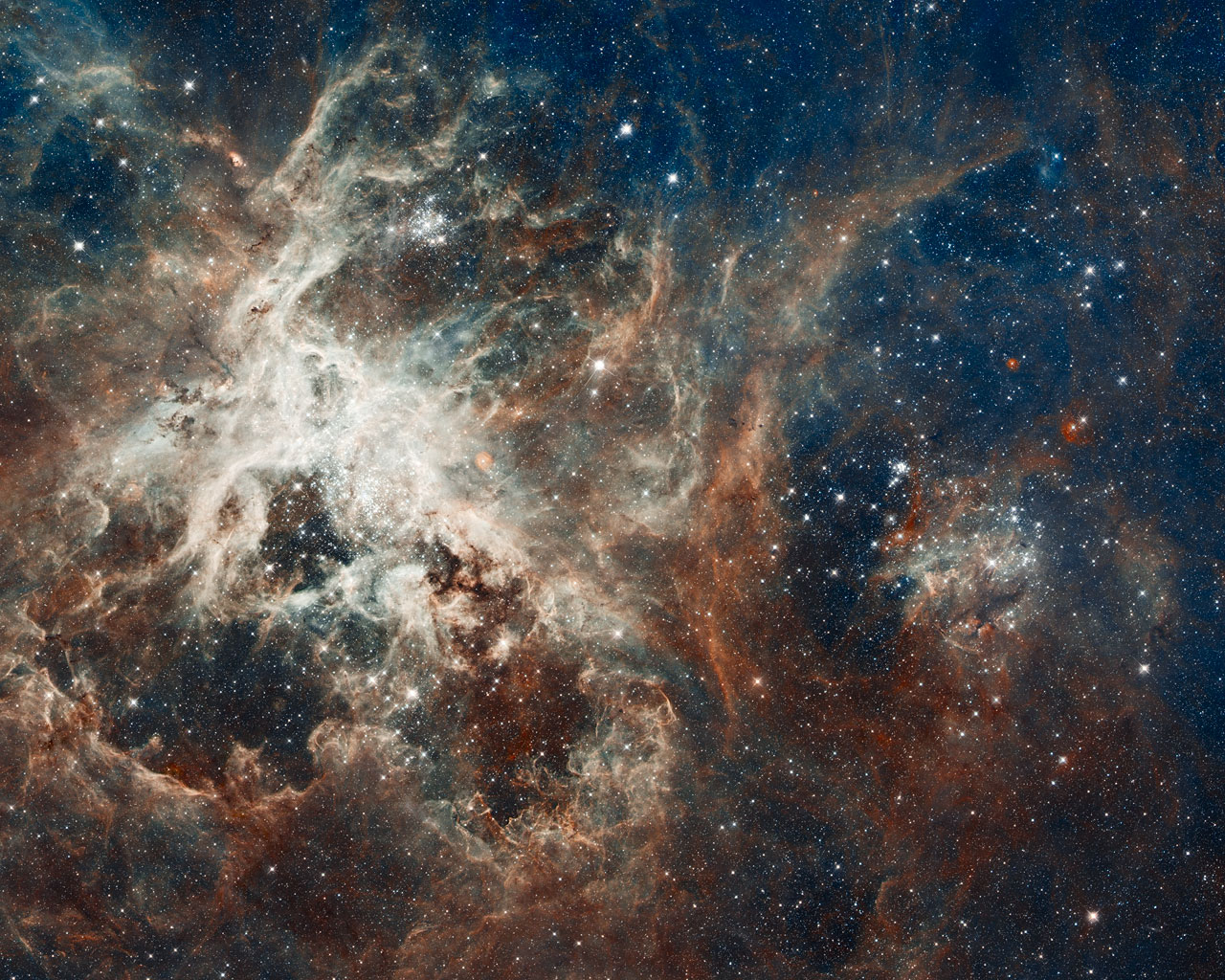 |
| Star Formation in the Tarantula Nebula (May 16, 2012) |
This image is one of the largest mosaics ever created by observations of the Hubble Space Telescope, and was released for the 22nd anniversary of the Hubble's launch.
Tuesday, May 22, 2012
Quarter 4 Astronomer Biography: Subrahmanyan Chandrasekhar
Subrahmanyan Chandrasekhar was an astrophysicist who is best known for is theoretical work on stellar evolution, namely neutron stars and white dwarfs. He was born in Lahore on October 19th, 1910. His parents were Sita Balakrishnan, a "woman of high intellectual attainments," and Chandrasekhara Subrahmanya Ayyar, a Government Service in the Indian Audits and Accounts Department.
Chandra was home schooled until he was twelve, and in 1922, he attended the Hindu High School in Madras. From 1925 to 1930, he attended the Presidency College and earned a bachelor's degree in physics. During his studies at Presidency College, Chandra began his work on white dwarf stars.
About a month after his graduation, Chandra was awarded a Government of India scholarship for graduate studies in Cambridge, England. While in Cambridge, Chandra conducted research under the supervision of Professor R.H. Fowler, and received his Ph.D. In addition to this, he wrote papers on his research of white dwarfs.
From 1933 to 1937, Chandra was elected a Prize Fellowship at Trinity College. While there, he proposed his idea known as astrophysical Chandrasekhar limit. This limit describes the maximum mass of a white dwarf star (about 1.44 solar masses), which is also the minimum mass above which a star collapses into a neutron star or black hole.
In 1937, he was offered a position as a Research Associate at the University of Chicago. Prior to this, in 1936, Chandra married Lalitha Doraiswamy, whom he met at the Presidency College.
At the University of Chicago, he focused his studies on stellar dynamics from 1938 to 1943. He studied radiative transfer (energy transfer through electromagnetic radiation) from 1943 to 1950. From 1952 to 1961 he studied hydrodynamic and hydromagnetic stability. Chandra studied figures of equilibrium (namely shapes of celestial bodies), and in 1962 he started studying relativistic astrophysics, finishing in 1971. Finally, from 1974-1983, Chandra concluded his major studies with the mathematical theory of black holes. In 1983, Chandra received the Nobel prize in physics for his theoretical studies of the physical processes important to the structure and evolution of stars.
Subrahmanyan Chandrasekhar died from heart failure on August 21, 1995. Over his lifetime, he received 20 honorary degrees, was elected to 21 learned societies, and received many awards including: the Gold Medal of the Royal Astronomical Society of London; the Rumford Medal of the American Academy of Arts and Sciences; the Royal Medal of the Royal Society, London; the National Medal of Science; and the Henry Draper Medal of the National Academy of Sciences. Chandra was honored with the naming of one of NASA's observatories after him: the Chandra X-Ray Observatory.
Tuesday, May 15, 2012
Q4 Astronomer Biography Sources
"Chandra :: About Chandra :: Subrahmanyan Chandrasekhar - The Man Behind The Name." Chandra :: About Chandra :: Subrahmanyan Chandrasekhar - The Man Behind The Name. Web. 11 Apr. 2012. <http://chandra.harvard.edu/about/chandra.html>.
Chandrasekhar, Subramanyan. "Autobiography." Subramanyan Chandrasekhar. Nobelprize.org. Web. 11 Apr. 2012. <http://www.nobelprize.org/nobel_prizes/physics/laureates/1983/chandrasekhar-autobio.html>.
"Subrahmanyan Chandrasekhar." Answers.com. Answers. Web. 11 Apr. 2012. <http://www.answers.com/topic/subrahmanyan-chandrasekhar>.
"Subrahmanyan Chandrasekhar." Subrahmanyan Chandrasekhar. The National Accademies. Web. 11 Apr. 2012. <http://www.nas.edu/history/members/chandrasekhar.html>.
"Subrahmanyan Chandrasekhar." Subrahmanyan Chandrasekhar. The University of Chicago, 22 Aug. 1995. Web. 11 Apr. 2012. <http://www-news.uchicago.edu/releases/95/950822.chandrasekhar.shtml>.
Monday, May 14, 2012
APOD 4.7
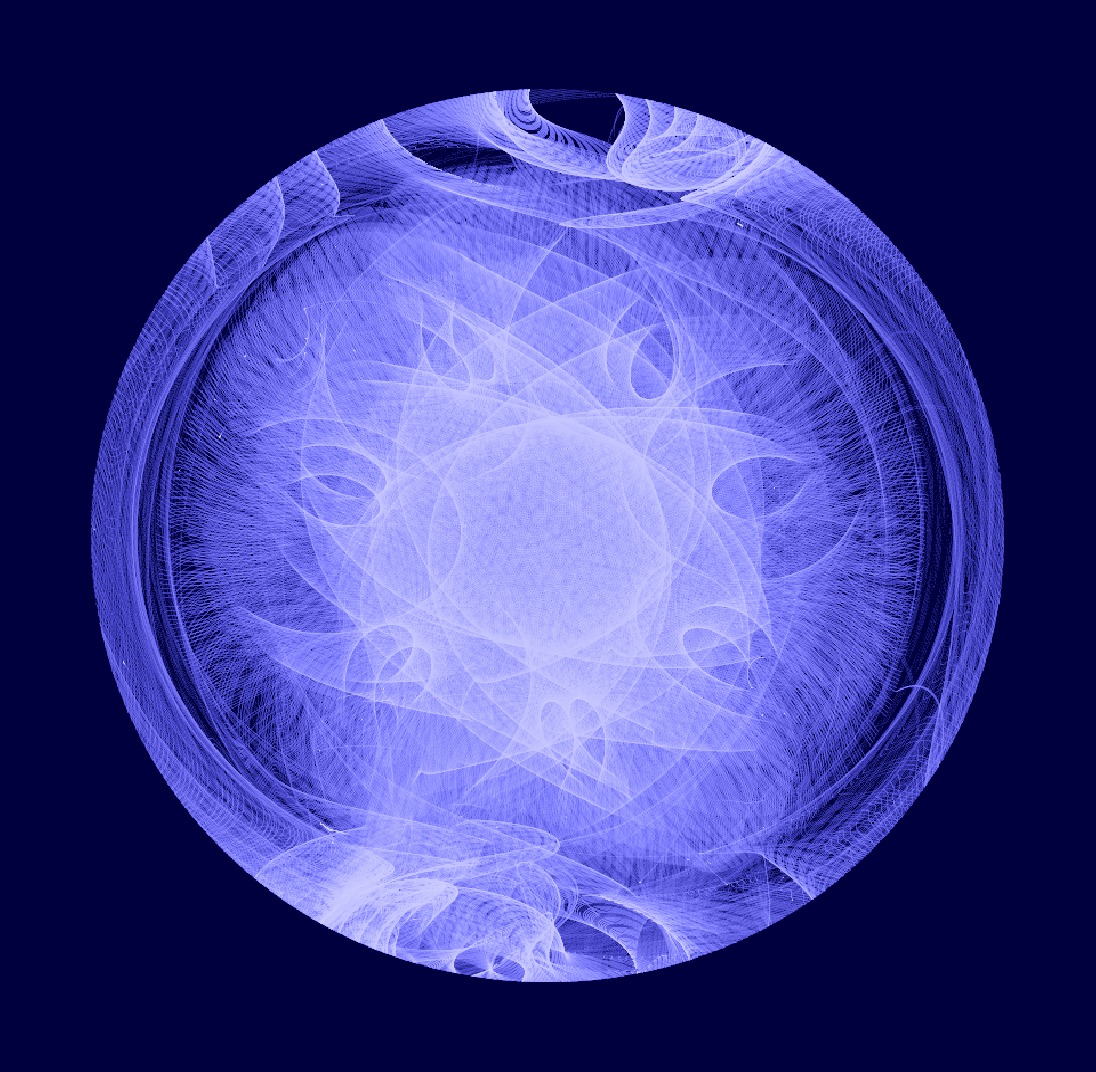 |
| Fermi Epicycles: The Vela Pulsar's Path (May 4, 2012) |
APOD 4.6
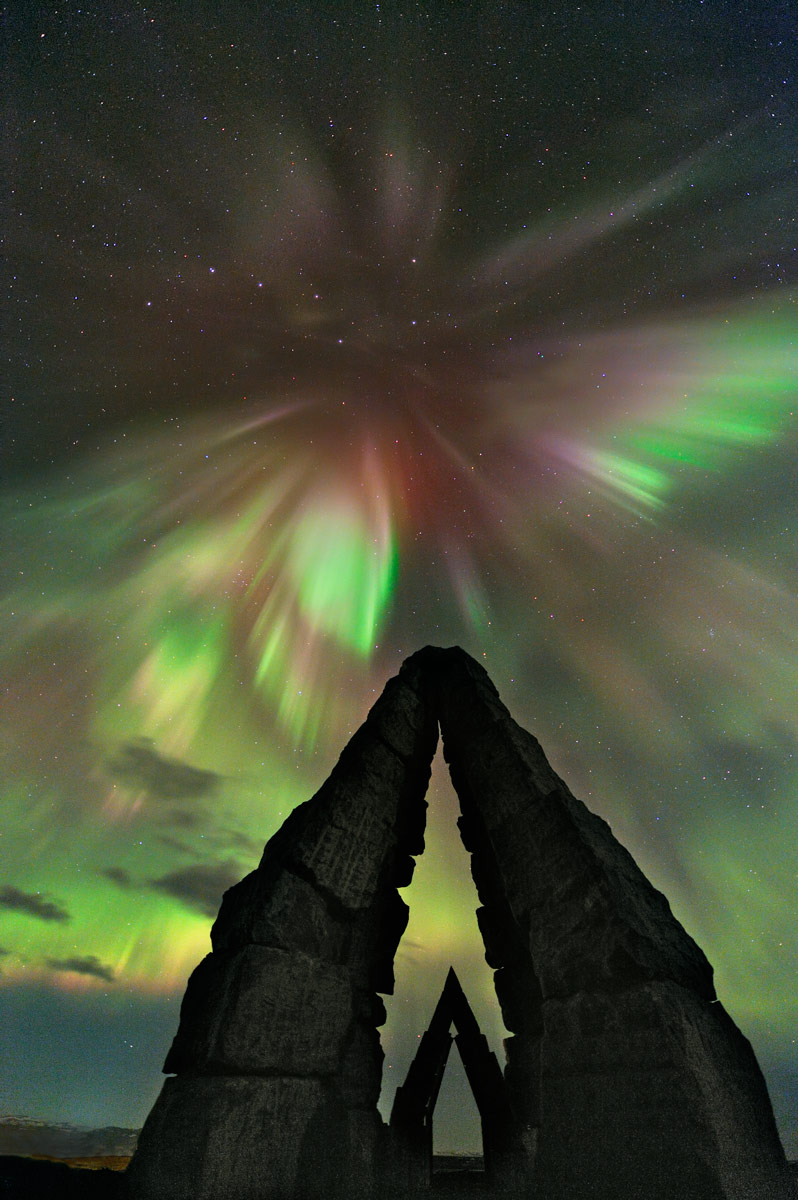 |
| Aurora Over Raufarhöfn (April 30, 2012) |
APOD 4.5
 |
| Yur's Planet (April 12, 2012) |
Subscribe to:
Comments (Atom)