 |
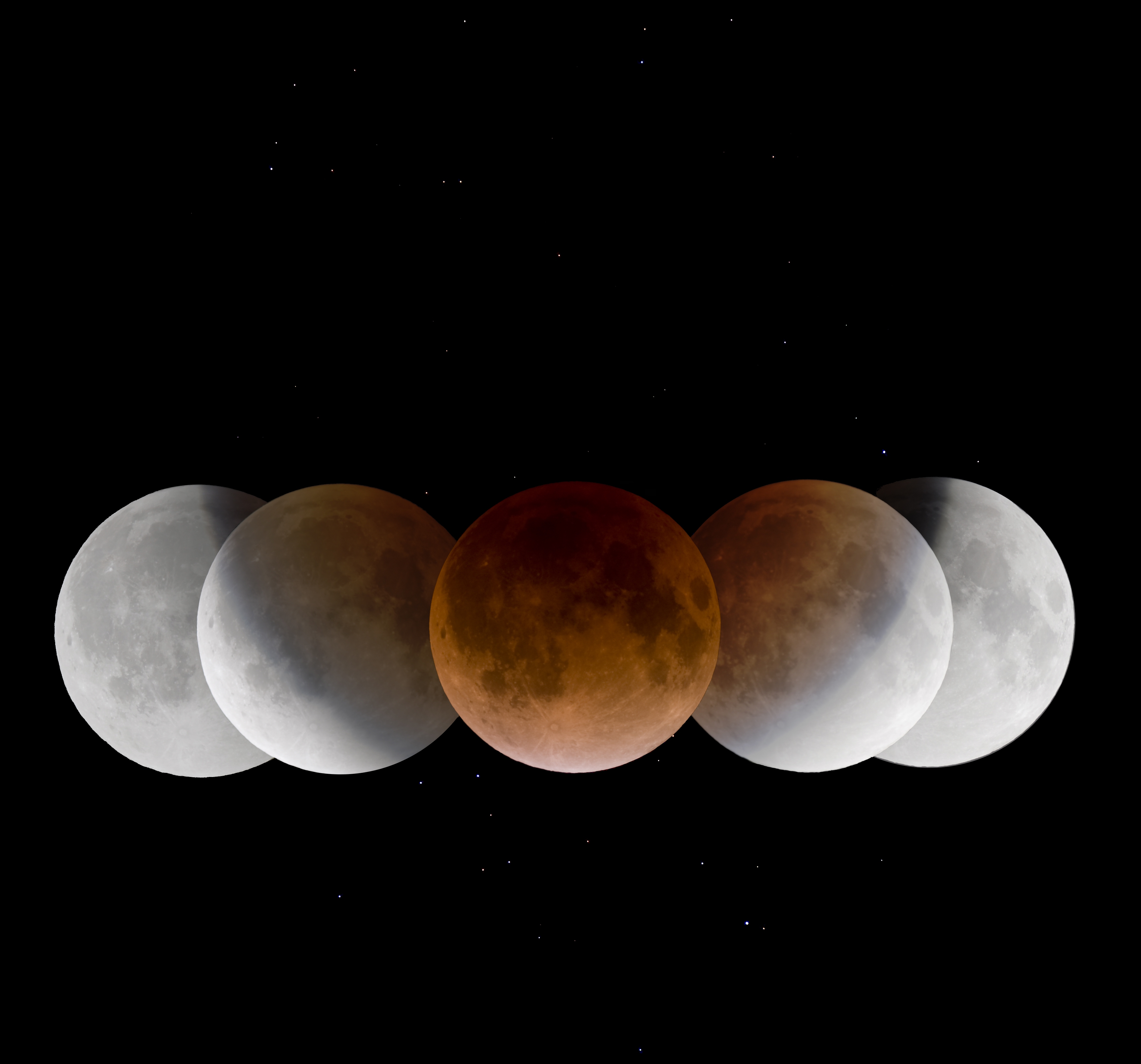
| The Umbra of Earth (December 15, 2011) |
Friday, December 16, 2011
APOD 2.6

APOD 2.5
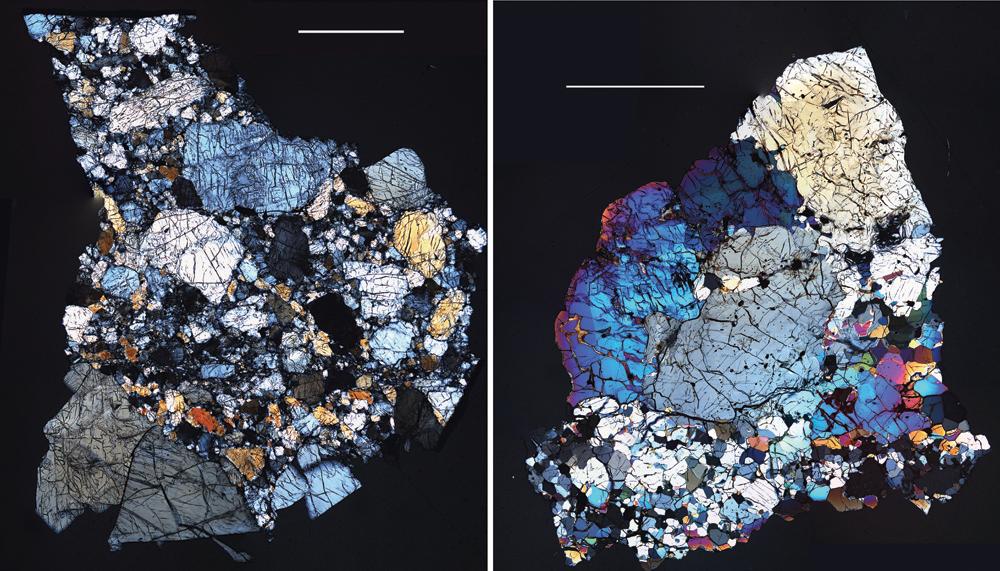 |
| Vesta Rocks (December 10, 2011) |
APOD 2.4
This picture was taken with a single, long exposure in a medium format camera with color slide film. It is a photograph of star trails and the colorful, cloud-like ocean over Medvednica mountain, near Zagreb, Croatia. From the way the star trails appear, the North Celestial Pole is off in the upper right edge of the frame.
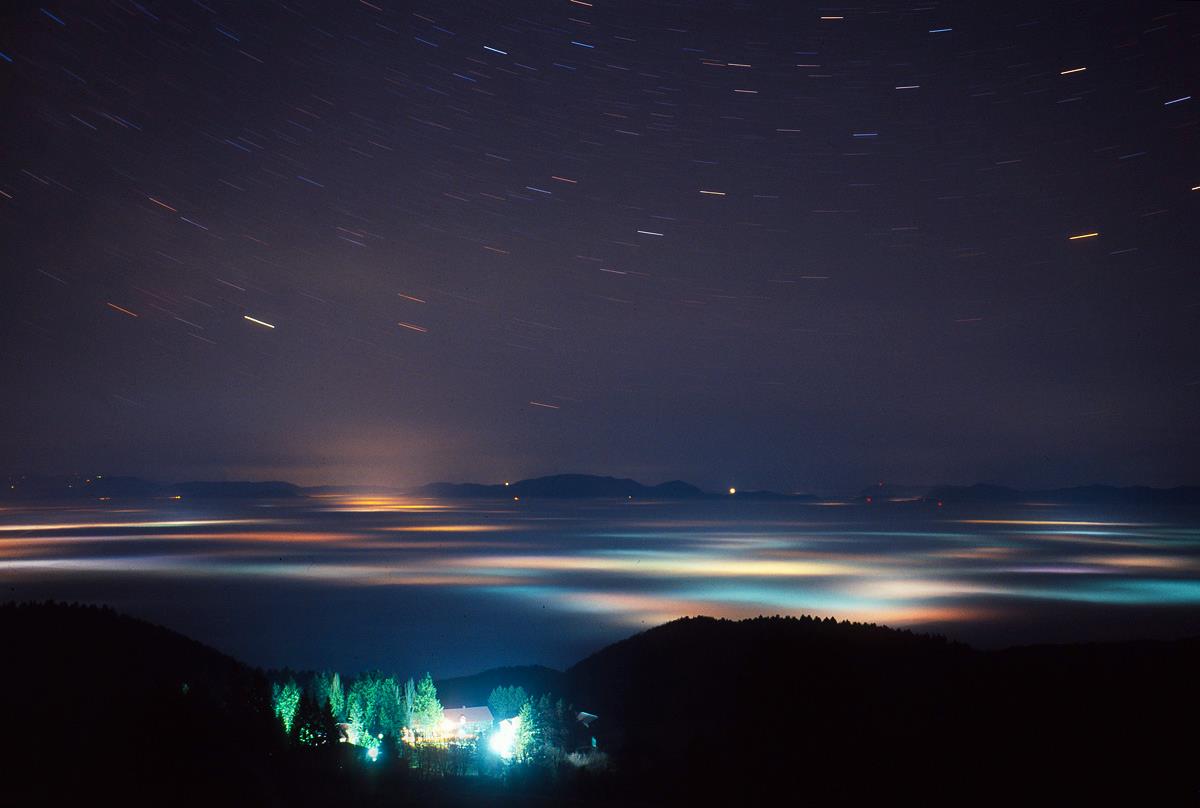 |
| As Above, So Below (December 3, 2011) |
Sunday, December 4, 2011
Observation on December 4, 2011
Location: My house (27.309583 latitude, -82.503184 longitude)
Temperature: 70 degrees Fahrenheit
Weather: Partly cloudy
Time: 8:00 EST to 9:30 EST
Because of a street light, trees, clouds, and the brightness of the moon, it was difficult to view much. The moon was so bright that it formed a moon halo of about 3 degrees when measured with my fist. Despite the set backs, I was able to observe Jupiter, Orion and Orion's belt, Draco, the Pleiades cluster, and Cassiopeia.
Next time I'm going to have to go somewhere that does not have as much light pollutioin to spoil the fun!
Temperature: 70 degrees Fahrenheit
Weather: Partly cloudy
Time: 8:00 EST to 9:30 EST
Because of a street light, trees, clouds, and the brightness of the moon, it was difficult to view much. The moon was so bright that it formed a moon halo of about 3 degrees when measured with my fist. Despite the set backs, I was able to observe Jupiter, Orion and Orion's belt, Draco, the Pleiades cluster, and Cassiopeia.
Next time I'm going to have to go somewhere that does not have as much light pollutioin to spoil the fun!
Subscribe to:
Comments (Atom)