Particles aren't just little bundles of matter that fly around, they're waves. This means that have a wavelength that gets refracted and interacts with the material around it. After this realization that particles are also waves, trying to describe what they do and where they are was so different, that scientists had to rethink everything they had already established. This wave-like property brought up the problem of trying to determine the position of a wave because combining the wavelengths and velocities to determine the position, it gets lost because there are no limits on the momentum of the wave, so we no longer know where it is.
So, what Heisenberg came up with was that it is impossible to know both the position and momentum of a particle at any given moment because the more precisely the position is determined, the less precisely the momentum is known in this instant, and vice versa. Further, Heisenberg argued that such concepts as orbits of electrons do not exist in nature unless and until we observe them. This is because one cannot know the precise position and momentum of a particle at a given instant, so its future cannot be determined; one cannot calculate the precise future motion of a particle, but only a range of possibilities for the future motion of the particle.
Heisenberg's principle does not state that everything is uncertain, just that there are limits to certainty and uncertainty when dealing with objects at the subatomic level.
Sunday, April 29, 2012

Friday, April 27, 2012
APOD 4.4
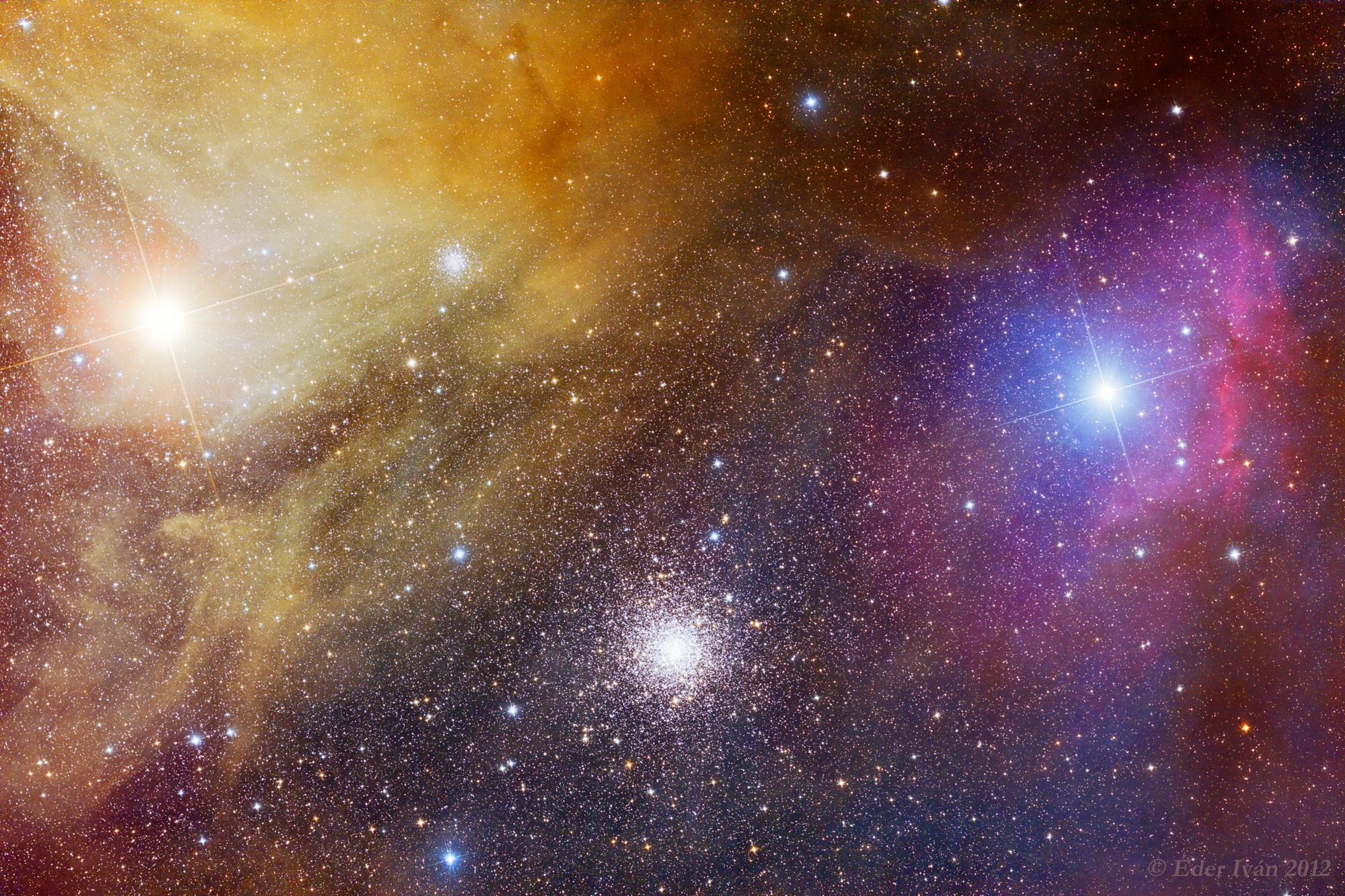 |
| Antares and Clouds (April 17, 2012) |
Friday, April 20, 2012
APOD 4.3
 |
| Paris by Night (March 31, 2012) |
This same conjunction could be seen in other parts of the world, too. For example, I saw it in Sarasota, Florida.
At the moment, there are four planets that are visible in the sky: Jupiter, Venus, Mars, and Saturn.
APOD 4.2
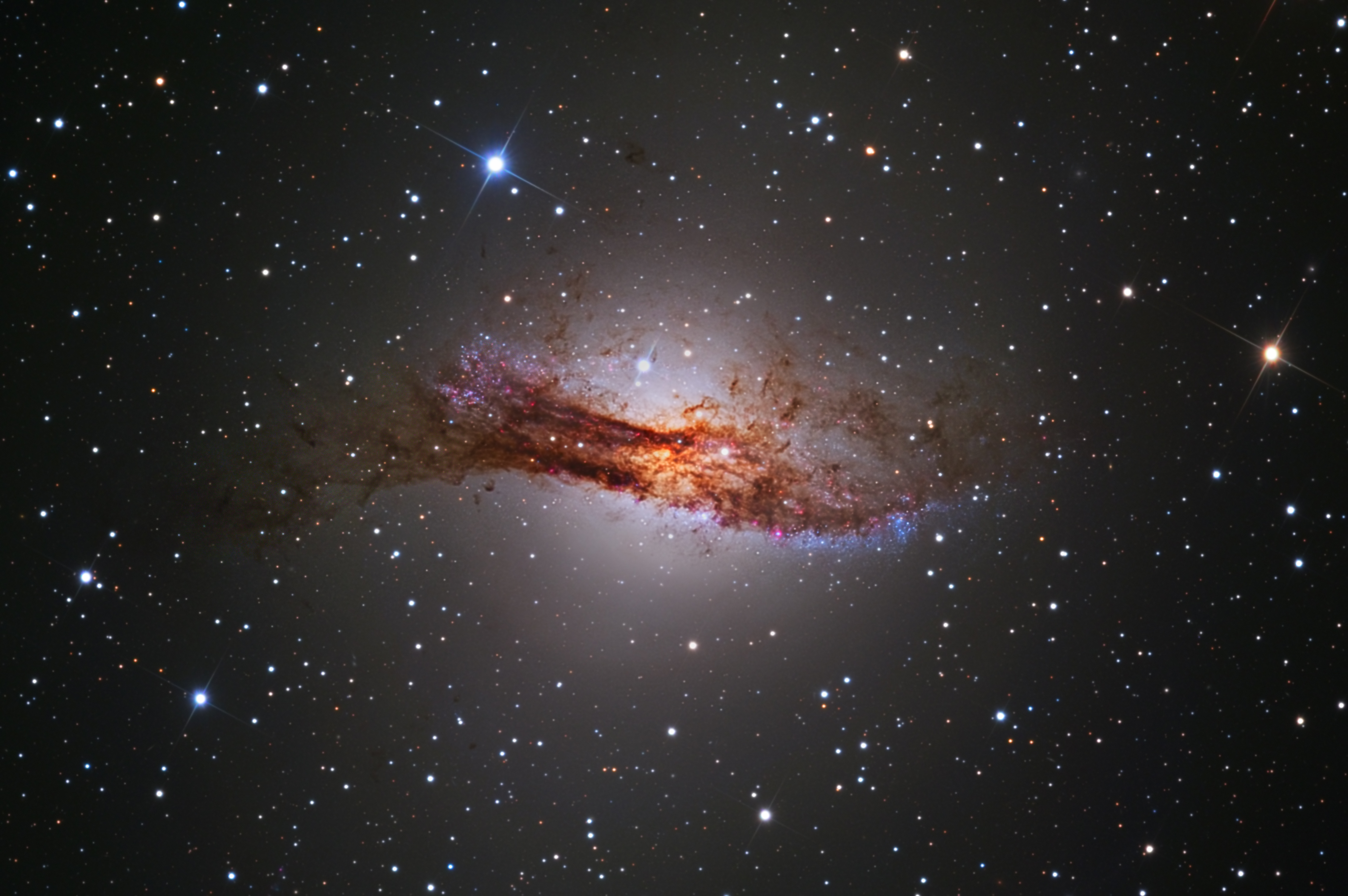 |
| Centaurus A (April 4, 2012) |
Subscribe to:
Comments (Atom)