Atkinson, Neill. "Barnard, William Edward - Biography." Dictionary of New Zealand Biography. Web. 22 Feb. 2012. <http://www.teara.govt.nz/en/biographies/4b5/1>.
"Edward Emerson Barnard (1857-1923)." SEDS Messier Database. Web. 22 Feb. 2012. <http://messier.seds.org/xtra/Bios/barnard.html>.
"Edward Emerson Barnard Biography." BookRags. BookRags. Web. 22 Feb. 2012. <http://www.bookrags.com/biography/edward-emerson-barnard/>.
Wednesday, February 22, 2012

The Formation of Stars

A star is formed out of cloud of cool, dense molecular gas that collapses and increases in density. This can happen when the cloud collides with another dense molecular cloud or it is near enough to another cloud to encounter the pressure caused by a giant supernova. Multiple stars can be formed at once with the collision of two galaxies. In both instances, heat from the mutual gravity pulling all the material inward is required in order to fuel the reaction. The newborn star is called a protostar.
Next, the protostar can become a brown dwarf (a sub-stellar object that cannot maintain high enough temperatures to perpetuate hydrogen fusion to helium) if it's a small star. If it's a medium or large protostar, it can either undergo a proton-proton chain reaction to convert hydrogen to helium, or a carbon-nitrogen-oxygen cycle to convert hydrogen to helium. The difference is that the carbon-nitrogen-oxygen cycle occurs at much higher temperatures. After any of these processes, a new star is formed.
From there, the life cycle depends on how quickly the star consumes hydrogen. Once it has consumed most of its hydrogen, it is considered to be mature.
Friday, February 17, 2012
APOD 3.5
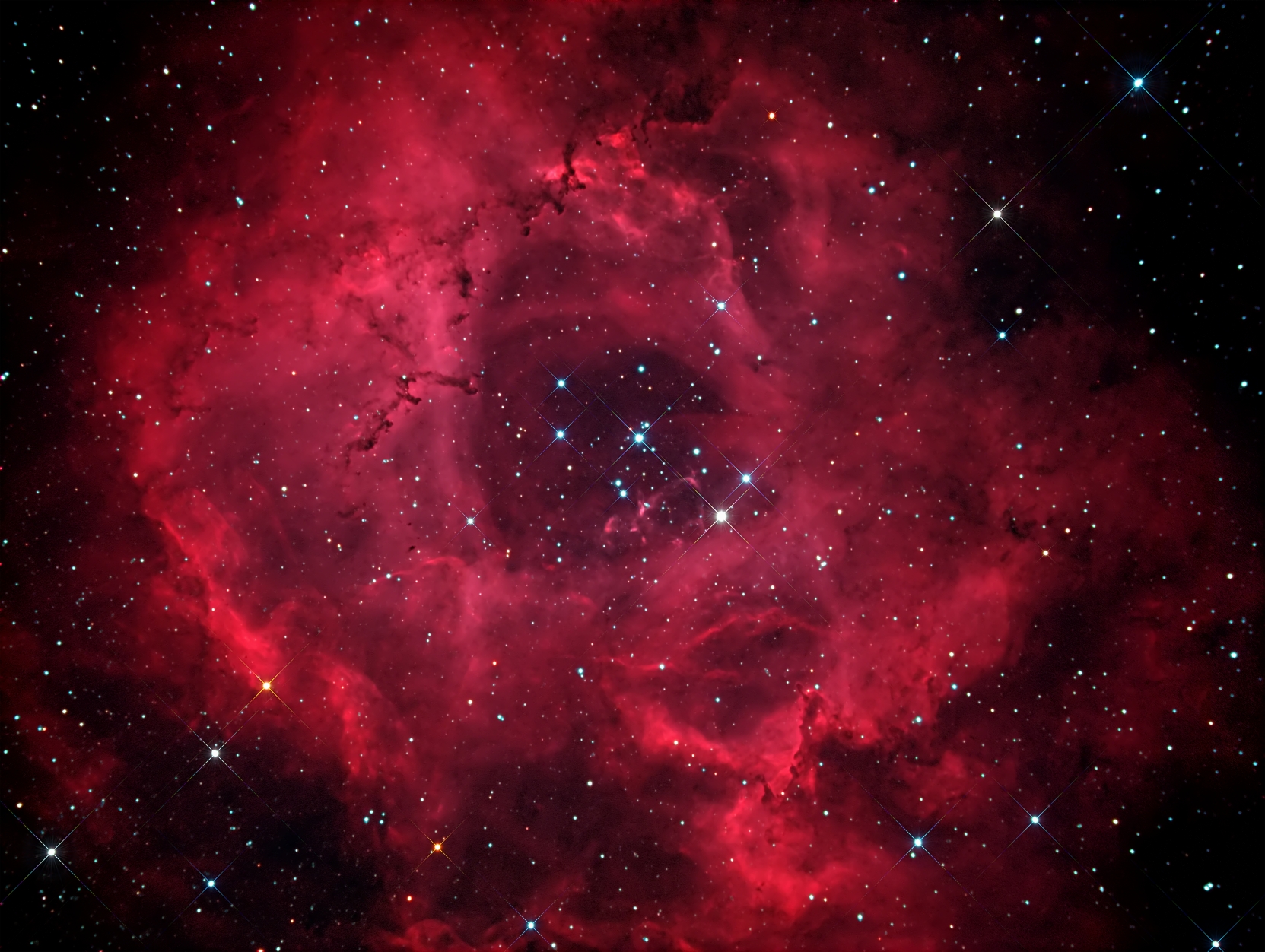 |
| The Rosette Nebula (February 14, 2012) |
Monday, February 13, 2012
Observation on February 12, 2012
Date: Sunday February 12, 2012
Time: 7:00 to 9:00 EST
Temperature: 47 degrees F
Location: Pine View School, Osprey, FL
Weather: Partly cloudy
It was quite chilly at our stargaze last night, but that did not stop us from seeing the stars! Through the telescope we were able to see Jupiter, and we viewed the Pleiades through binoculars.
We were able to identify the constellations Pegasus, Andromeda, Cassiopeia, Perseus, Taurus, Orion, Eridanus, Canis Major and Minor, Cancer, Gemini, and part of Leo and Ursa Major.
We were able to identify M42, the Hyades, and the stars Betelgeuse, Rigel, Aldebaran, Procyon, Sirius (the brightest star in the winter sky), Pollux, and Castor.
During the night we were also able to identify Venus and Jupiter located about 17 or 18 degrees apart from one another.
Though it was chilly and a little cloudy, we were able to spot so many things!
Time: 7:00 to 9:00 EST
Temperature: 47 degrees F
Location: Pine View School, Osprey, FL
Weather: Partly cloudy
It was quite chilly at our stargaze last night, but that did not stop us from seeing the stars! Through the telescope we were able to see Jupiter, and we viewed the Pleiades through binoculars.
We were able to identify the constellations Pegasus, Andromeda, Cassiopeia, Perseus, Taurus, Orion, Eridanus, Canis Major and Minor, Cancer, Gemini, and part of Leo and Ursa Major.
We were able to identify M42, the Hyades, and the stars Betelgeuse, Rigel, Aldebaran, Procyon, Sirius (the brightest star in the winter sky), Pollux, and Castor.
During the night we were also able to identify Venus and Jupiter located about 17 or 18 degrees apart from one another.
Though it was chilly and a little cloudy, we were able to spot so many things!
APOD 3.4
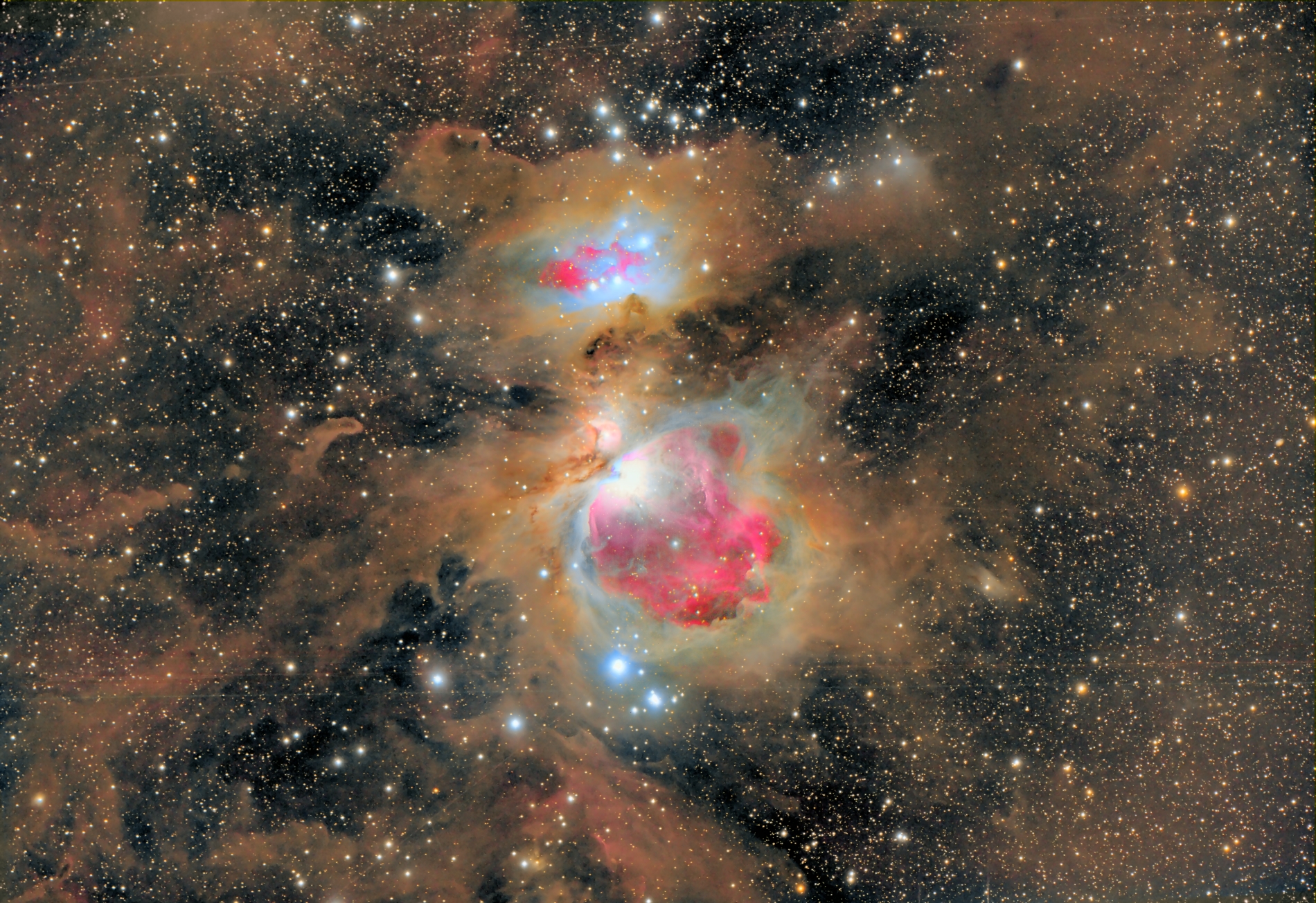 |
| Dust of the Orion Nebula (February 6, 2012) |
Friday, February 3, 2012
APOD 3.3
 |
| La Silla Star Trails North and South (February 2, 2012) |
APOD 3.2
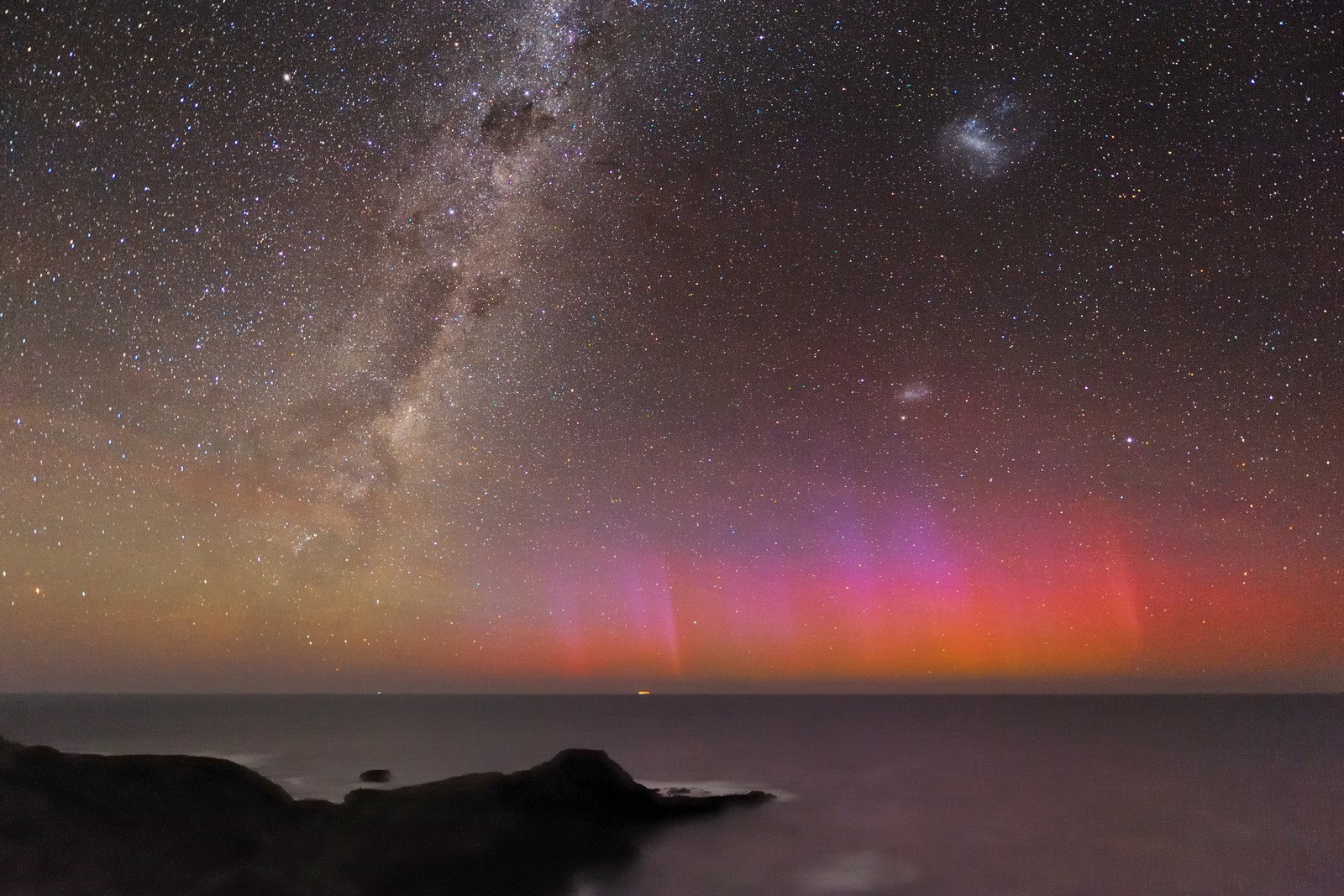 |
| Red Aurora Over Australia (February 1, 2012) |
Subscribe to:
Comments (Atom)