 |
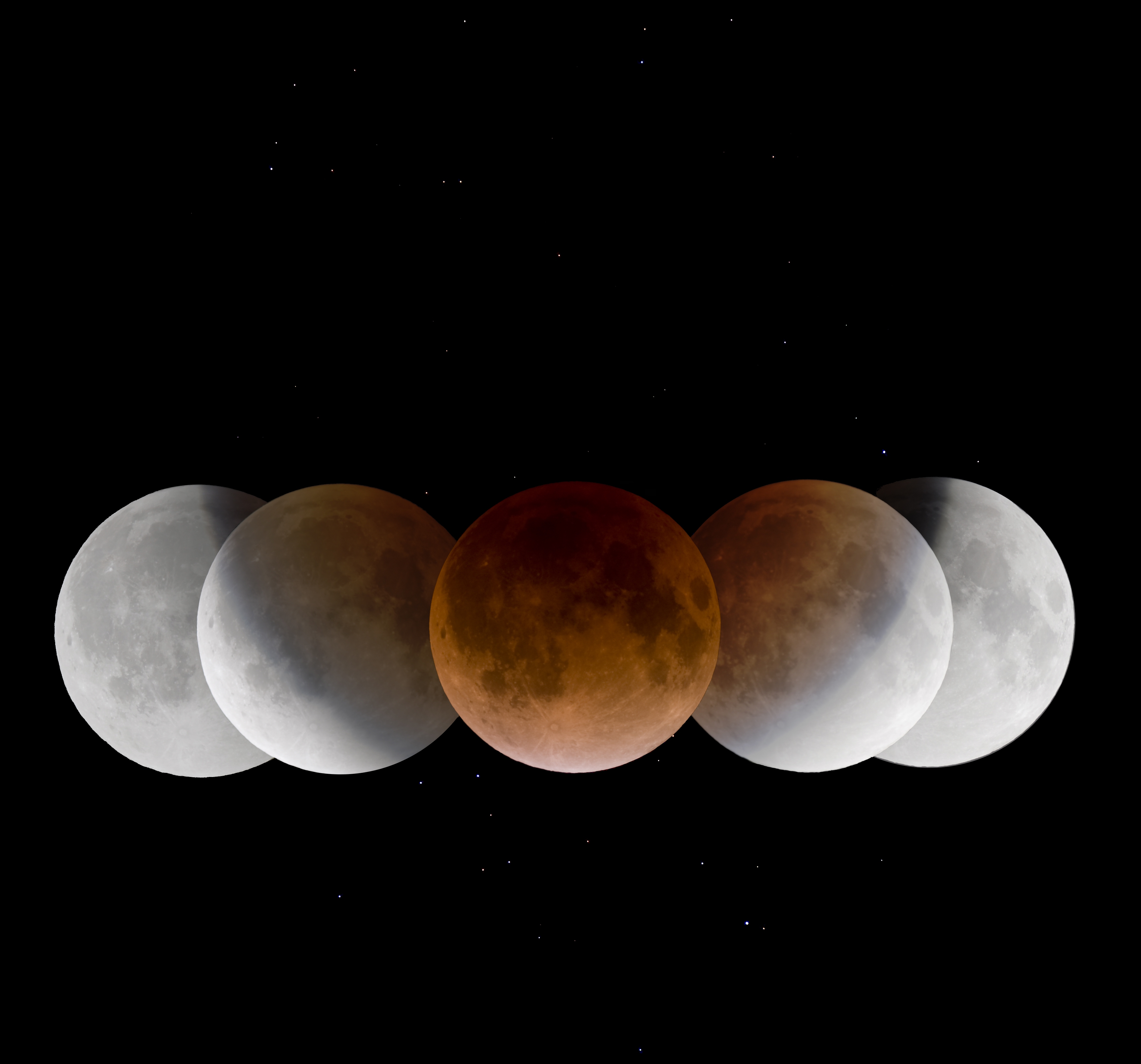
| The Umbra of Earth (December 15, 2011) |
Friday, December 16, 2011
APOD 2.6

APOD 2.5
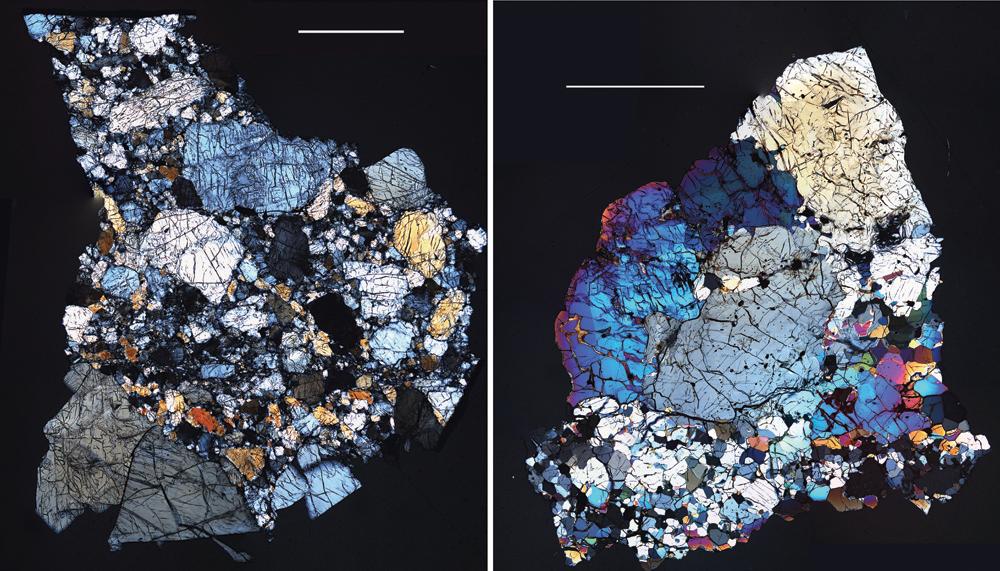 |
| Vesta Rocks (December 10, 2011) |
APOD 2.4
This picture was taken with a single, long exposure in a medium format camera with color slide film. It is a photograph of star trails and the colorful, cloud-like ocean over Medvednica mountain, near Zagreb, Croatia. From the way the star trails appear, the North Celestial Pole is off in the upper right edge of the frame.
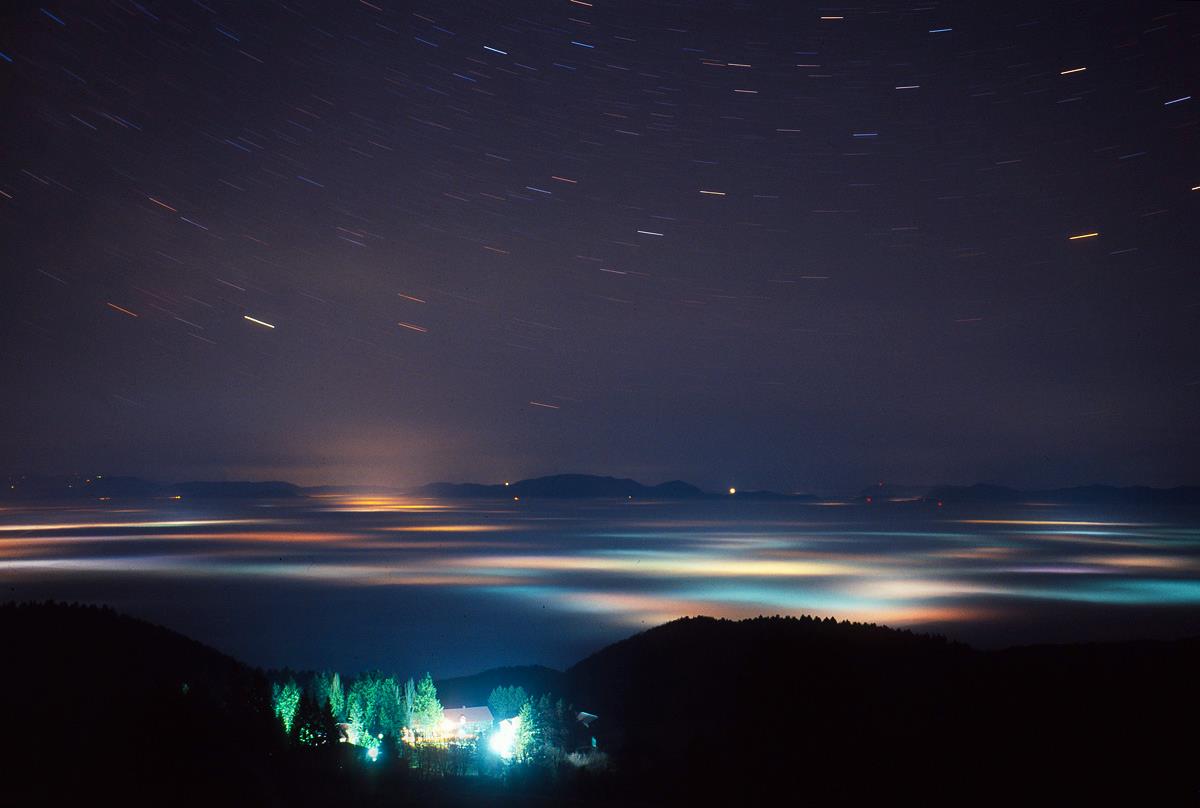 |
| As Above, So Below (December 3, 2011) |
Sunday, December 4, 2011
Observation on December 4, 2011
Location: My house (27.309583 latitude, -82.503184 longitude)
Temperature: 70 degrees Fahrenheit
Weather: Partly cloudy
Time: 8:00 EST to 9:30 EST
Because of a street light, trees, clouds, and the brightness of the moon, it was difficult to view much. The moon was so bright that it formed a moon halo of about 3 degrees when measured with my fist. Despite the set backs, I was able to observe Jupiter, Orion and Orion's belt, Draco, the Pleiades cluster, and Cassiopeia.
Next time I'm going to have to go somewhere that does not have as much light pollutioin to spoil the fun!
Temperature: 70 degrees Fahrenheit
Weather: Partly cloudy
Time: 8:00 EST to 9:30 EST
Because of a street light, trees, clouds, and the brightness of the moon, it was difficult to view much. The moon was so bright that it formed a moon halo of about 3 degrees when measured with my fist. Despite the set backs, I was able to observe Jupiter, Orion and Orion's belt, Draco, the Pleiades cluster, and Cassiopeia.
Next time I'm going to have to go somewhere that does not have as much light pollutioin to spoil the fun!
Friday, November 18, 2011
APOD 2.3
 |
| The Butterfly Nebula from Hubble (November 13, 2011) |
One can see where NGC 6302 gets its name: the clouds of dust that surround the central star branch out into what looks like wings.
Friday, November 11, 2011
APOD 2.2
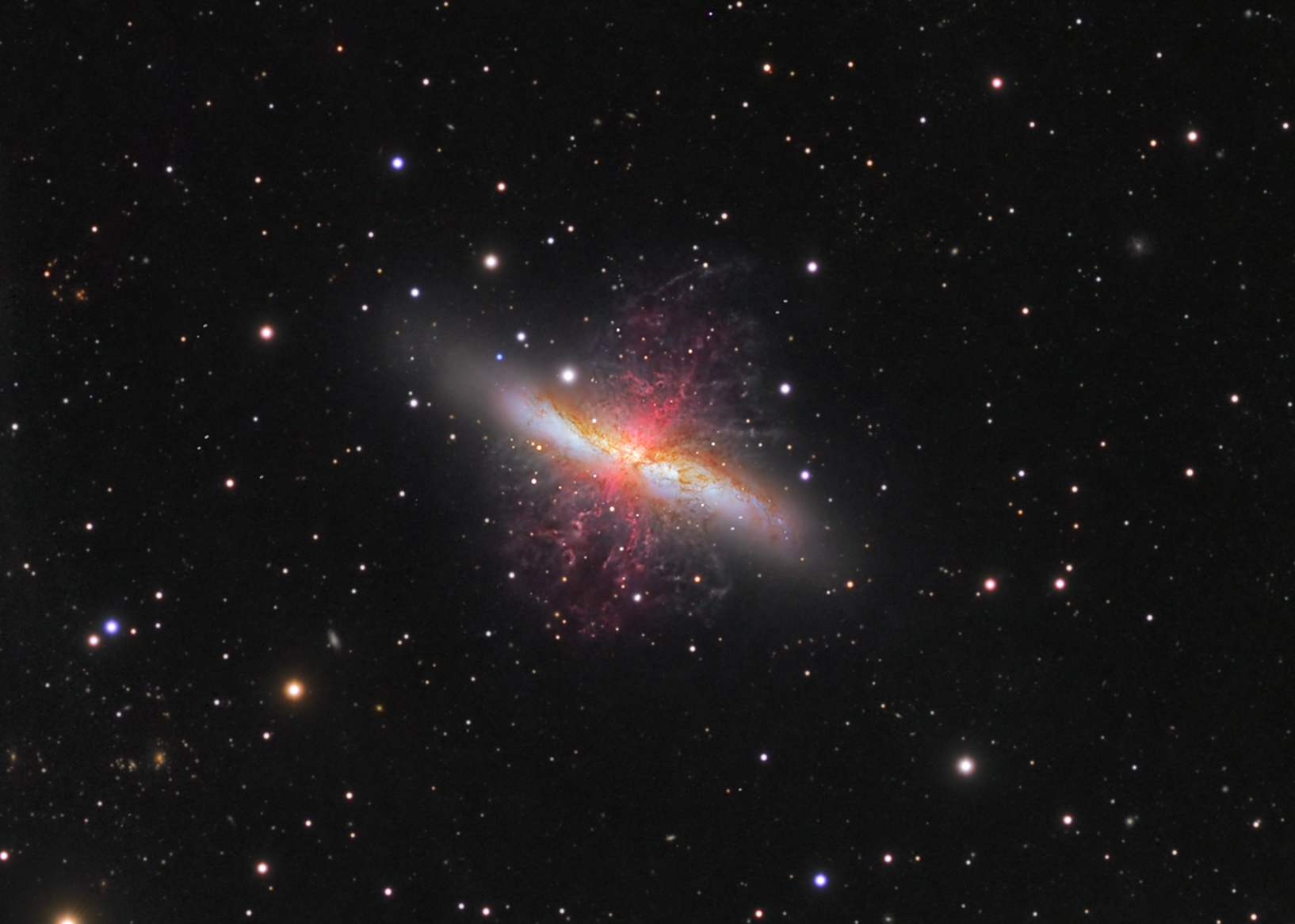 |
| M82: Starburst Galaxy with a Superwind (October 10, 2011) |
Friday, November 4, 2011
APOD 2.1
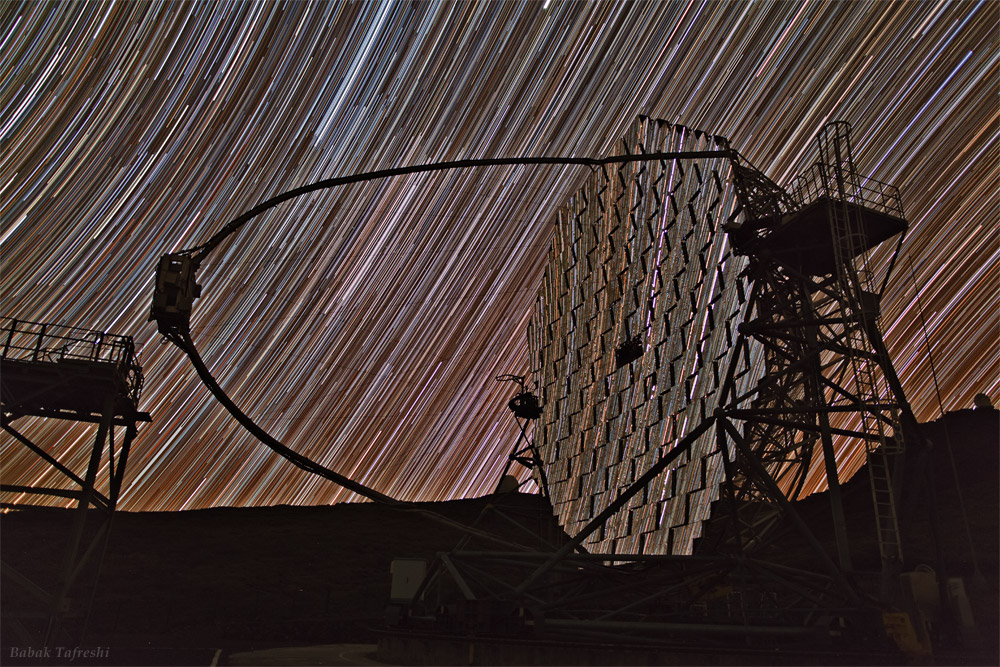 |
| MAGIC Star Trails (October 14, 2011) |
My favorite part of the photograph is that one can see the star trails' reflection on the telescope. This adds depth and interest to the picture.
Tuesday, October 25, 2011
"The Great World Wide Star Count"
Date: October 25, 2011
Local Time: 9:45 pm
Location: 27.309583 degrees latitude, and -82.503184 degrees longitude
Sarasota, FL 34239
I was able to observe many Magnitude 3 stars, and some Magnitude 4. I was able to identify the Summer Triangle, Cygnus, Cassiopeia, Pleiades, Jupiter, the Square of Pegasus, Perseus, and Draco. Because of a street light, houses, and a couple of large trees, it was difficult to see the southern parts of the sky.
Local Time: 9:45 pm
Location: 27.309583 degrees latitude, and -82.503184 degrees longitude
Sarasota, FL 34239
I was able to observe many Magnitude 3 stars, and some Magnitude 4. I was able to identify the Summer Triangle, Cygnus, Cassiopeia, Pleiades, Jupiter, the Square of Pegasus, Perseus, and Draco. Because of a street light, houses, and a couple of large trees, it was difficult to see the southern parts of the sky.
Sunday, October 23, 2011
APOD 1.8
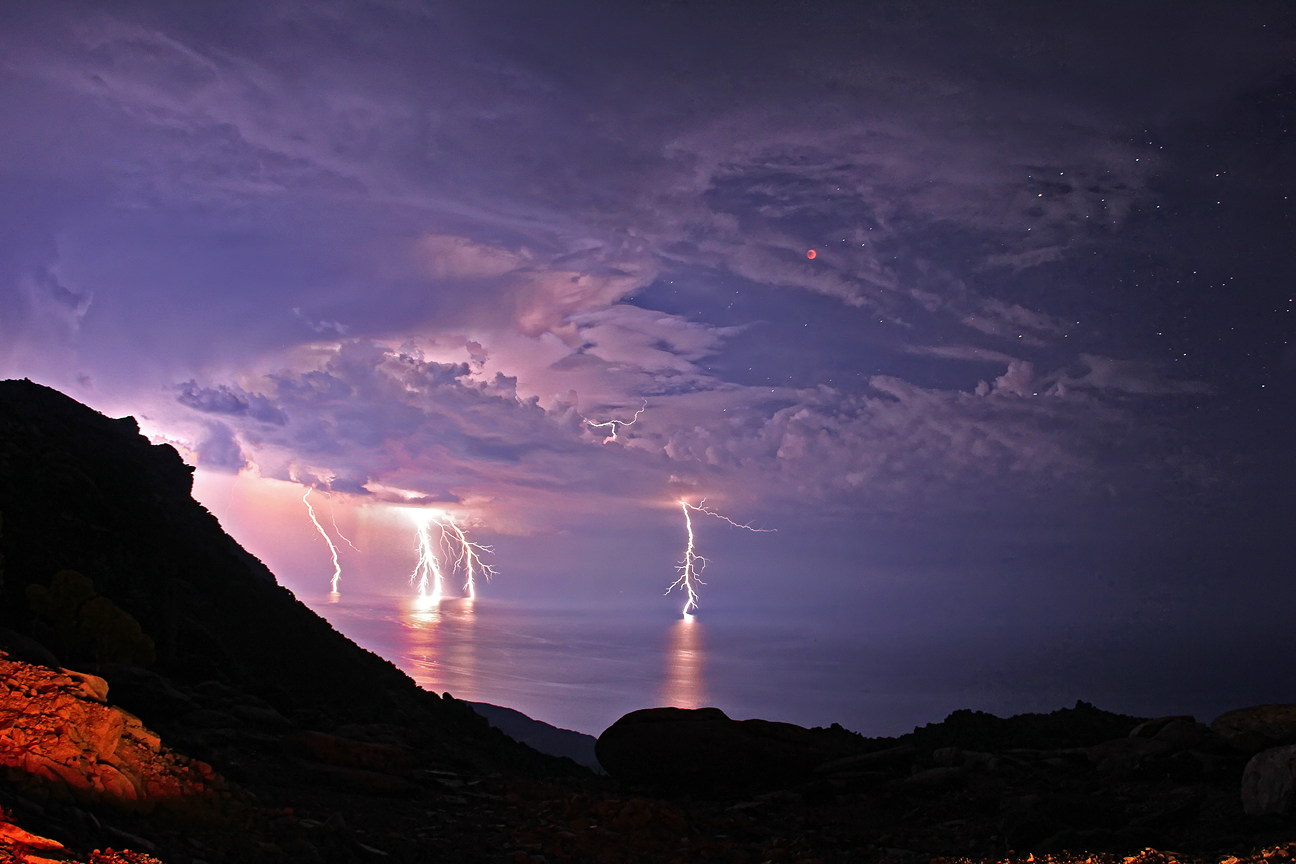 |
| Lightning Eclipse from the Planet of the Goats (June 18, 2011) |
On June 15th there was a lunar eclipse spanning over Europe, Africa, Asia, and Australia, during which occurred a thunderstorm that was passing over Greece. There were lightning strikes that occurred and were captured on a 30 second exposure.
The name comes from the island that it was taken on: the Greek island of Ikaria at Pezi, which translates to "the planet of the goats."
What captivated me about this picture was the harsh, bright lightning bolts juxtaposed with the darker sky where the stars are peeking through the clouds. Nature is a curious thing!
The name comes from the island that it was taken on: the Greek island of Ikaria at Pezi, which translates to "the planet of the goats."
What captivated me about this picture was the harsh, bright lightning bolts juxtaposed with the darker sky where the stars are peeking through the clouds. Nature is a curious thing!
Friday, October 14, 2011
Quarter 1 Astronomer Biography: Joann Bayer
Born in 1572 in Rhain, Bavaria, Germany, Johann Bayer produced the most understandable pre-teloscopic catalog of the stars and established a nomenclature for stars in a constellation that can be seen with the naked eye. His catalog is considered the first atlas of the sky that represented the stars around the South Pole and mapped the whole celestial sphere.
Johann Bayer was not originally an astronomer; he studied law. He moved to Augsburg, Germany to practice law after attending the University at Ingolstadt in 1592. In Augsburg, Bayer worked more on his astronomy interests, and ended up published his catalog, Uranometria, in 1603. Uranometria was a mapping of the sky and a classification system for stars in constellations. Johann Bayer dedicated his book to two leading citizens, and the city counsel of Augsburg, and was appointed the legal advisor to the city.
Bayer was just an amateur astronomer, but the significance of his work was the innovation of his naming system. Bayer wanted to clear up the confusion over the previous naming system by precisely identifying and naming each star in a constellation. Each star was named with a letter from the 24-letter Greek alphabet. If there were more than two dozen stars in the constellation that could be seen with the naked eye, then the Latin alphabet was used also.
Bayer's system did have some flaws: what previous astronomers labeled at the right side of a constellation, he labeled as the left, and he bracketed star within the same constellation that had the same magnitude, but did not indicate how he chose the letters within the brackets. This lead to confusion among astronomers, and there are still objections to some of the theories of how Bayer chose the letters. Bayer's original designations are still in use today, in addition to further designated stars. Because of the advances in technology, more dim stars were able to be located and astronomers have named them with only Roman numerals and the numerals in combination with letters. This lead to additions to Bayer's classification.
Despite the confusion over the structure of the nomenclature of the stars, Johann Bayer aided the division of the celestial sphere. He died in 1625 at the age of 53, Bayer's legacy still lives on. His accomplishments in the field of astronomy were beneficial to the division and organization of the sky, and are still in practice today.
APOD 1.7
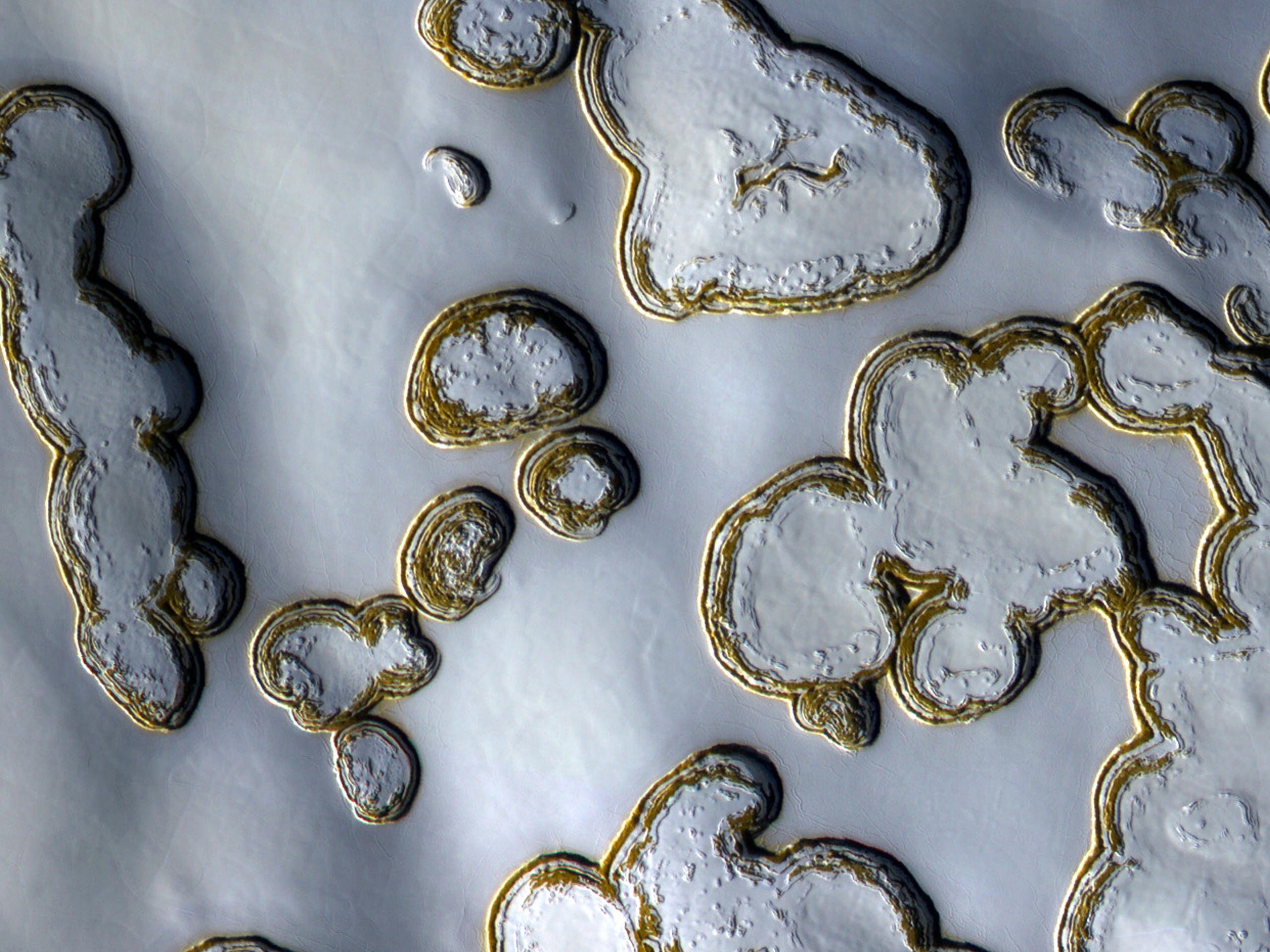 |
| Dry Ice Pits on Mars (September 26, 2011) |
Friday, October 7, 2011
APOD 1.6
 |
| Violent Sunspot Group AR 1302 Unleashes a Flare (September 28, 2011) |
This solar flare is huge! I like that the Earth is in the background too because it gives one perspective on the magnitude of space and the solar system. You can tell that the Earth is far away, and the flare is BIG.
Friday, September 30, 2011
Q1 Astronomer Biography Sources
"Bayer, Johnann." Complete Dictionary of Scientific Biography. Vol. 1. Detroit: Charles Scribner's Sons, 2008. 530-531. Gale Virtual Reference Library. Web. 29 Sep. 2011.
Norton, Stephen D. "Johann Bayer." Science and Its Times. Ed. Neil Schlager and Josh Lauer. Vol. 3: 1450 to 1699. Detroit: Gale, 2001. 361-362. Gale Virtual Reference Library. Web. 29 Sep. 2011.
"The Open Door Web Site : History of Science and Technology : Johann Bayer." The Open Door Web Site : Home Page. Shirley Burchill, 2010. Web. 29 Sept. 2011. http://www.saburchill.com/HOS/astronomy/012.html.
Westfall, Richard S. "Bayer, Johann." The Galileo Project. Web. 29 Sept. 2011. <http://galileo.rice.edu/Catalog/NewFiles/bayer.html>.
APOD 1.5
This photo is of M20, the Trifid Nebula, and it's about 5,000 light-years away from Earth and 40 light-years in diameter. It is near the constellation Sagittarius, also known as the Archer. This nebula has three distinct types of astronomical nebulae: red emission nebulae, blue reflection nebulae, and dark nebulae. The red emission nebulae is basically light emitted from hydrogen atoms. Blue reflection nebulae are produced by the reflection of starlight on dust. In dark nebulae, dense dust clouds appear as a silhouette.
The red-pink area reminds me of cracked clay; it adds depth to the photograph.
I find nebulae to be quite fascinating; the whole concept it quite incredible. I love that gases and dust can create such beautiful sculptures within the universe.
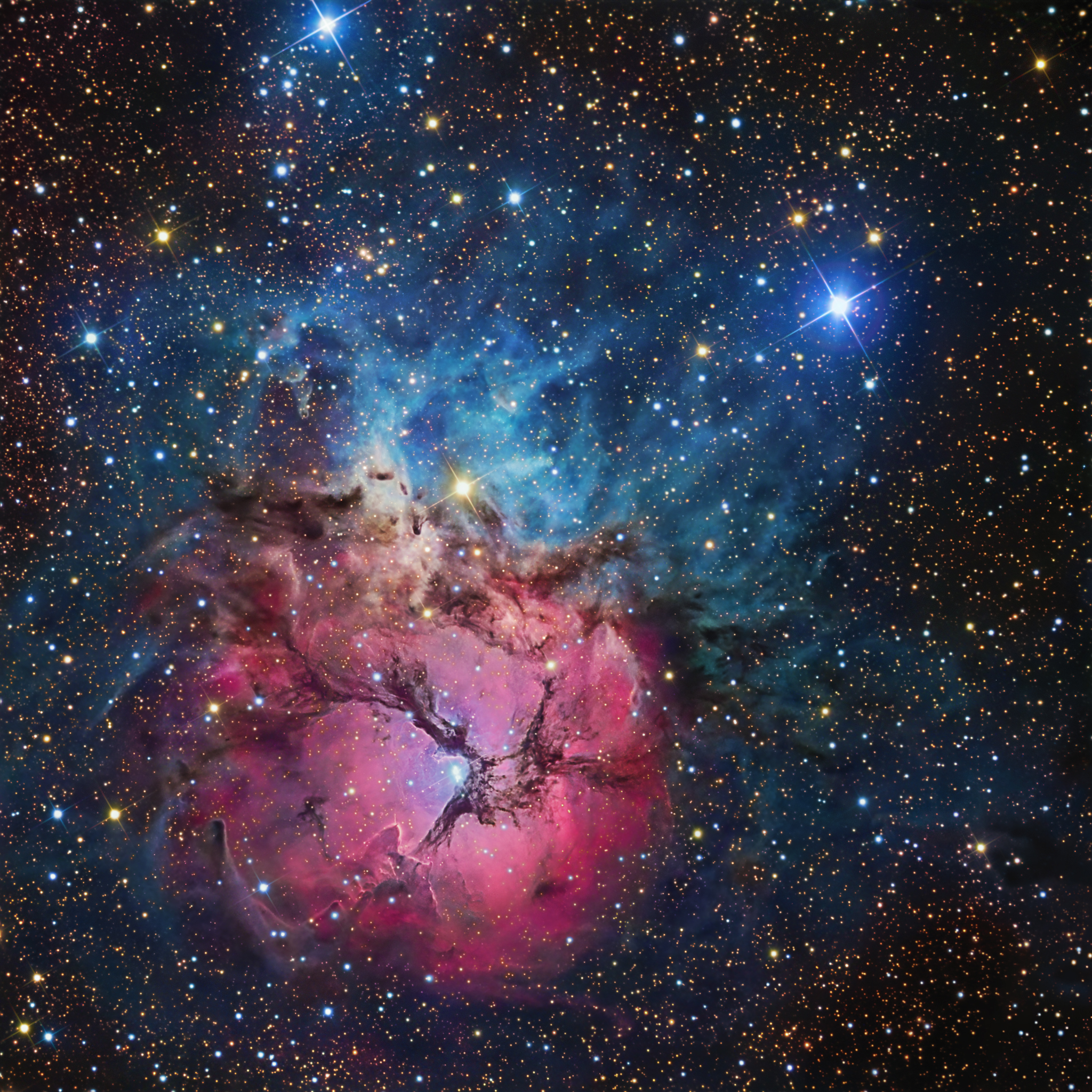 |
| A Beautiful Trifid (May 13, 2011) |
The red-pink area reminds me of cracked clay; it adds depth to the photograph.
I find nebulae to be quite fascinating; the whole concept it quite incredible. I love that gases and dust can create such beautiful sculptures within the universe.
Observation Session on September 28, 2011
Date: Wednesday, September 28, 2011
Time: 8:00 pm EST to 10:00 pm EST
Temperature: low to mid 80s (degrees Fahrenheit); around 83 degrees
Location: Parking Lot across the street from Casey Key Fish House; Osprey, FL
Clear skies
Because it was so clear, we were able to spot many constellations, satellites, a planet, a few M objects, and even a meteor.
We saw Sagittarius, Scorpius, Delphinus (Job's Coffin), Corona Australis, Aquila, "The Big Dipper," "The Little Dipper," and Hercules (Keystone). We were able to see stars such as Antares, Altair, Vega, Deneb, and Polaris. Because we saw Altair, Vega, and Deneb we were able to locate the Summer Triangle.
We observed M8, M13, and Jupiter through a telescope at 80 power. M8 is also known as the Lagoon Nebula, and it was a collection of stars and dust that had gray-ish tint to it. M13 is what is called a globular cluster of stars. The two brightest stars in the cluster were a yellow and a blue color. When viewing Jupiter, we could see some of its moons, and faint lines that are the iconic Jupiter coloring (brown, yellow, orange, white, etc).
I was able to observe the movement of two satellites; one was moving down the celestial sphere toward the north, and the other toward the west.
The thing that impressed me the most was the scale of the constellations; when looking at a star chart, one is not able to comprehend the magnitude of the constellations. I was surprised to see how big the Teapot of Sagittarius was.
Throughout the night, we were able to observe the gradual movement of the celestial sphere. When we arrived, Antares was visible; when we left, it was not.
Time: 8:00 pm EST to 10:00 pm EST
Temperature: low to mid 80s (degrees Fahrenheit); around 83 degrees
Location: Parking Lot across the street from Casey Key Fish House; Osprey, FL
Clear skies
Because it was so clear, we were able to spot many constellations, satellites, a planet, a few M objects, and even a meteor.
We saw Sagittarius, Scorpius, Delphinus (Job's Coffin), Corona Australis, Aquila, "The Big Dipper," "The Little Dipper," and Hercules (Keystone). We were able to see stars such as Antares, Altair, Vega, Deneb, and Polaris. Because we saw Altair, Vega, and Deneb we were able to locate the Summer Triangle.
We observed M8, M13, and Jupiter through a telescope at 80 power. M8 is also known as the Lagoon Nebula, and it was a collection of stars and dust that had gray-ish tint to it. M13 is what is called a globular cluster of stars. The two brightest stars in the cluster were a yellow and a blue color. When viewing Jupiter, we could see some of its moons, and faint lines that are the iconic Jupiter coloring (brown, yellow, orange, white, etc).
I was able to observe the movement of two satellites; one was moving down the celestial sphere toward the north, and the other toward the west.
The thing that impressed me the most was the scale of the constellations; when looking at a star chart, one is not able to comprehend the magnitude of the constellations. I was surprised to see how big the Teapot of Sagittarius was.
Throughout the night, we were able to observe the gradual movement of the celestial sphere. When we arrived, Antares was visible; when we left, it was not.
Friday, September 23, 2011
APOD 1.4
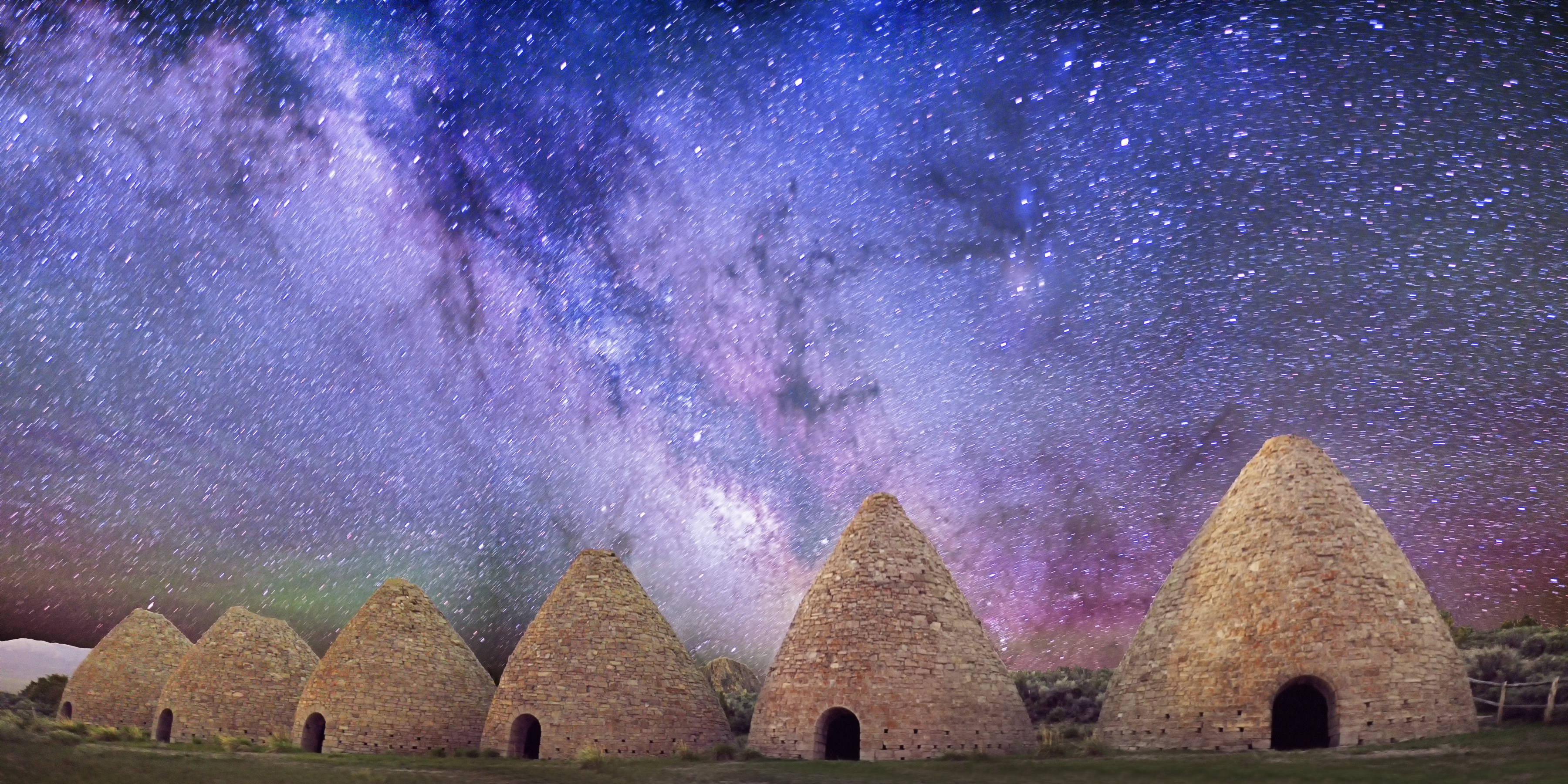 |
| Milky Way Over Abandoned Kilns (July 25, 2011) |
This picture is so beautiful; it makes one appreciate the advances in astronomy that have been made over the course of history.
Thursday, September 22, 2011
Astronomy Cast 1.2: Giovanni Cassini (Episode 228)
This podcast is a brief biography of Giovanni Cassini and his major contributions of the discovery of Saturn's moons, the gap in Saturn's rings (known as the Cassini Division), Jupiter's Red Spot, and the speed of light. Cassini lived at the time when gravity was discovered, and, believe it or not, he did not accept the truth of gravity at first. However, Cassini was a very smart person: he obtained his PhD at the age of 25, determined the rotation rate of Jupiter, and his observations lead the calculation of the speed of light. That is crazy: it is an amazing thing that he was able to come to the conclusion of the speed of light by observing the accelerations and lags in the planets' moons' phases. His contribution to our understanding of the universe was a grand one: he developed complex ideas that made a huge impact on the growth of calculations of the universe. Giovanni Cassini's work lead to an accurate understanding of the scale of the solar system, and the distance of the planets.
Astronomy Cast 1.1: Johannes Kepler and His Laws of Planetary Motion (Episode 189)
This podcast was about Johannes Kepler, his contributions to modern astronomy, and how he made his conclusions. He did not make very good observations because he had bad eyesight, but used Tycho Brahe's observations and data. Kepler used Brahe's data to construct a workable theory of the solar system. Kepler's laws of planetary motion state that the planets orbit the sun in a elliptical shape, that a line connecting a planet and the sun sweeps out equal areas during equal amounts of time, and that the square of the orbital period of a planet is directly proportional to the cube of the semi-major axis of the orbit. As it turns out, Kepler's work was not recognized and accepted until after he was dead. That must have been pretty frustrating for Kepler: he worked endlessly to develop these laws, and no one recognized them until after he was long gone. However, Kepler's laws and mathematical calculations are still being taught and used today; a major accomplishment that took time to be realized.
Friday, September 16, 2011
APOD 1.3
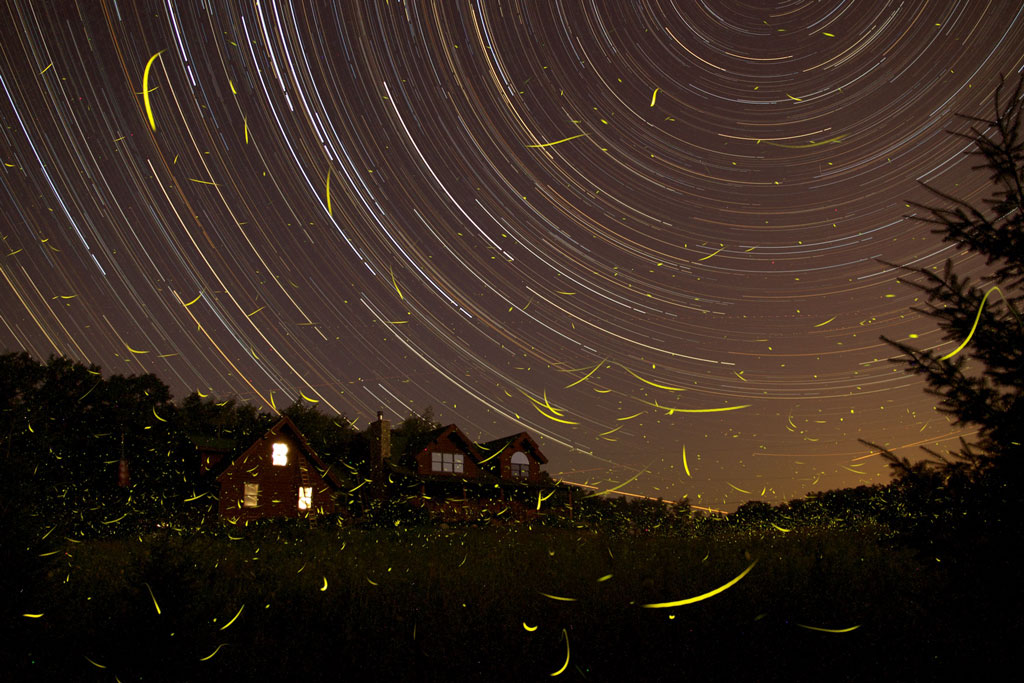 |
| A Summer Night's Dream (August 5, 2011) |
I have always wanted to capture star trails, but was never sure how long to set the exposure; now I know!
Sunday, September 11, 2011

Friday, September 9, 2011
APOD 1.2
This photo was actually a winner of the International Earth and Sky Photo Contest, and I can see why! This photograph depicts the auroral rings over Jökulsárlón, the largest glacial lake in Iceland. Within the ring, one can see the band of the Milky Way Galaxy and the Pleiades open clusters if stars. Aurora rings are caused by solar winds and blasts of charged particles from the Sun.
If this is what it looked like to the people that were there, I'm taking a vacation to Iceland!
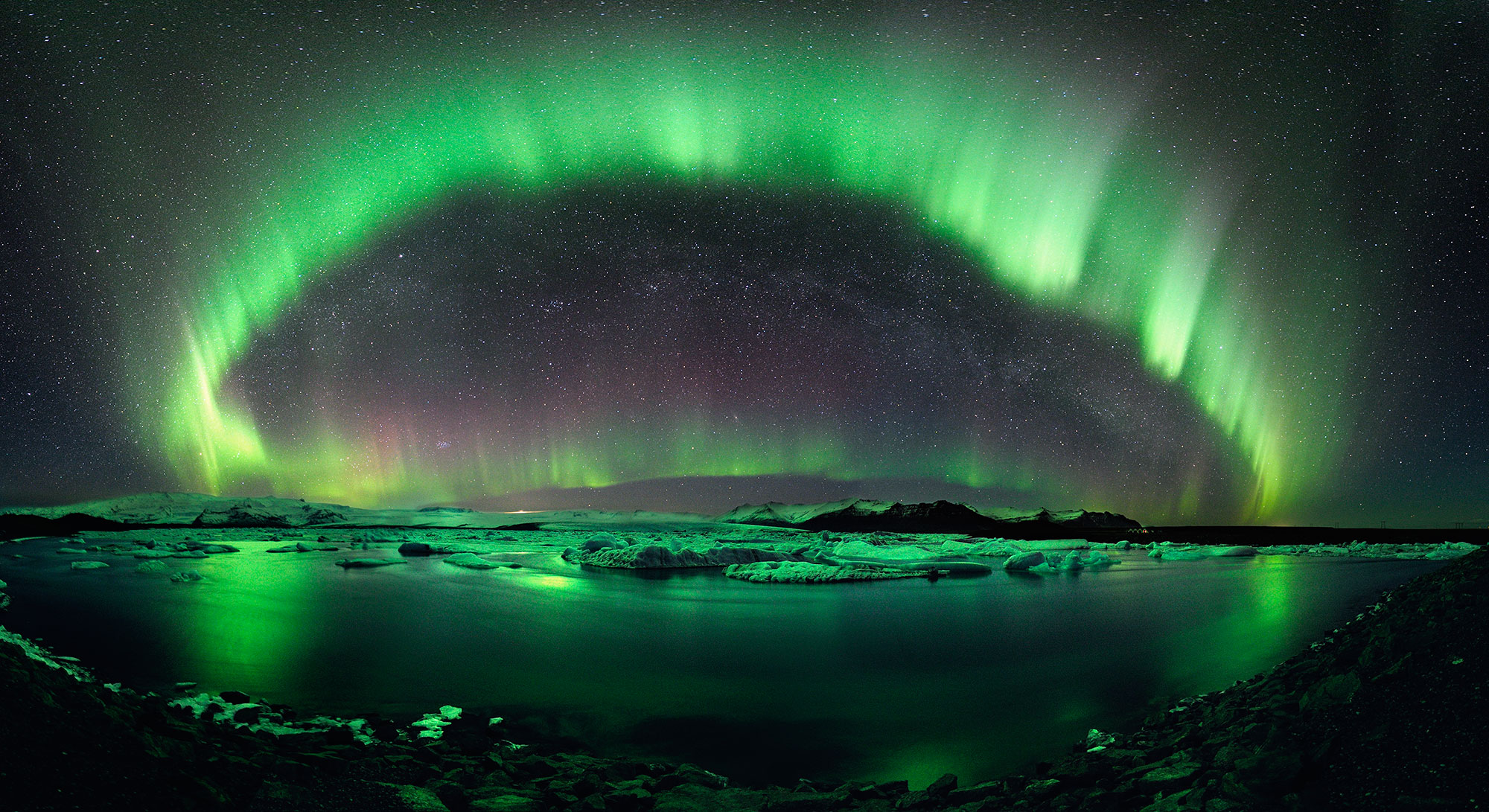 |
| A Starry Night of Iceland (May 17, 2011) |
If this is what it looked like to the people that were there, I'm taking a vacation to Iceland!
Monday, September 5, 2011
APOD 1.1
This photograph brings to mind the question: what on Earth is that? For starters, it's not on Earth; it's around Earth. This is a photograph of the ecliptic plane.
As it turns out, this is a 'sandwich' of two different pictures: one taken in the northern hemisphere, and the other in the southern hemisphere. The horizon lines were met at the middle, and edited together. The faint S-shape that extends accross the picture is sunlight scattered by dust that is along the solar system's ecliptic plane.
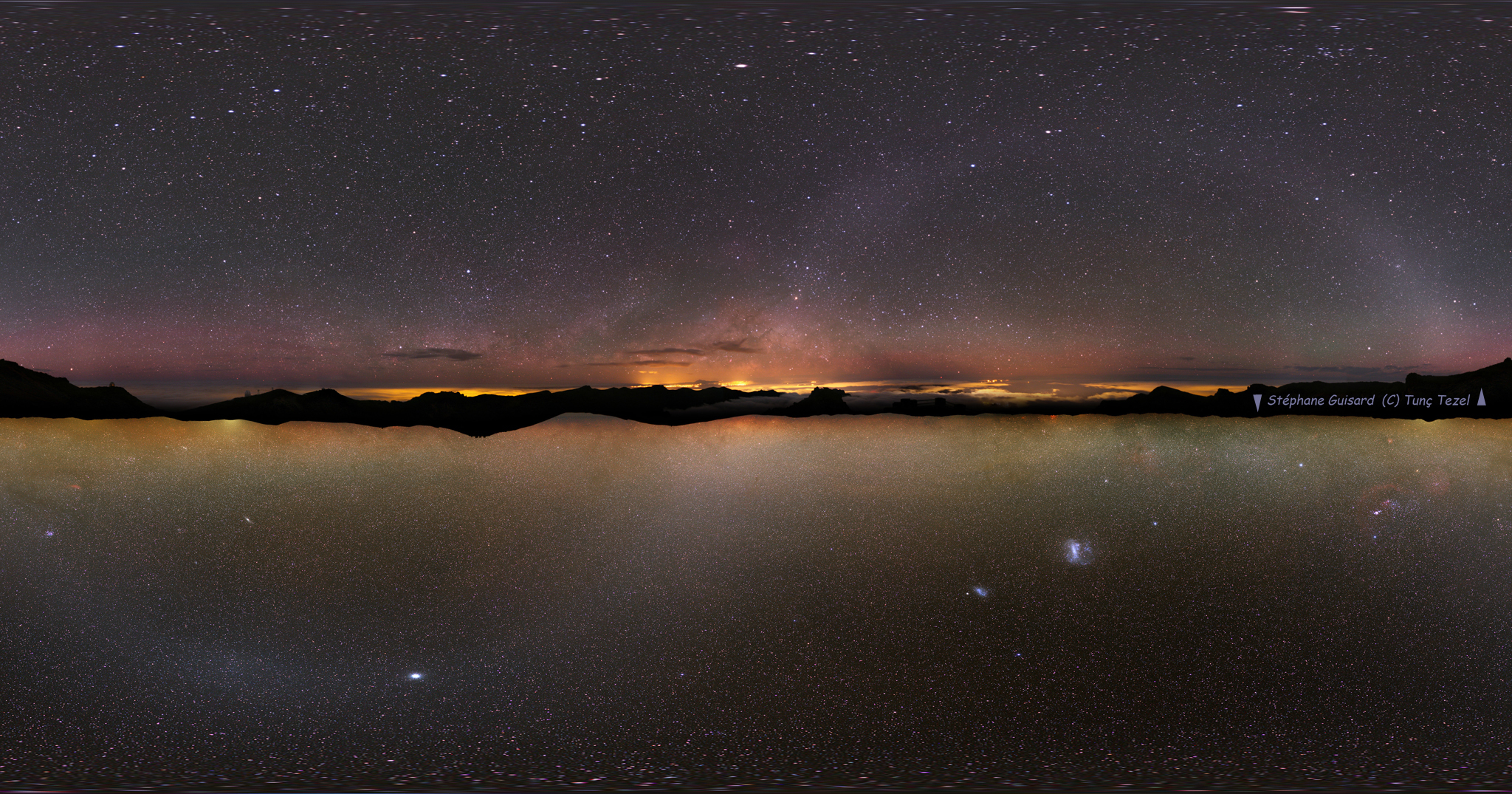 |
| A Tale of Two Hemispheres (July 30, 2011) |
As it turns out, this is a 'sandwich' of two different pictures: one taken in the northern hemisphere, and the other in the southern hemisphere. The horizon lines were met at the middle, and edited together. The faint S-shape that extends accross the picture is sunlight scattered by dust that is along the solar system's ecliptic plane.
Subscribe to:
Comments (Atom)